Maldives Tour Guide
Maldives
The Maldives is an island nation in the Indian Ocean, organized into 20 administrative atolls plus the capital, Malé City.
The Maldives is a nation of coral atolls in the Indian Ocean, made up of the capital Malé, a scattering of resort islands, and 191 inhabited local islands spread across 21 administrative atolls. Most travellers stay in one of two very different ways: a private resort island — one island, one property, all-inclusive — or a local island, where guesthouses sit inside a real Maldivian community alongside its mosque, school and harbour. Both give access to the same reefs, lagoons and marine life; what differs is the kind of trip. Everything below — atolls, islands, stays, activities, transfers, packages and travel guides — links back to the same real MTG catalogue, so wherever you start, you can get to everything else.
Destinations
Browse by atoll
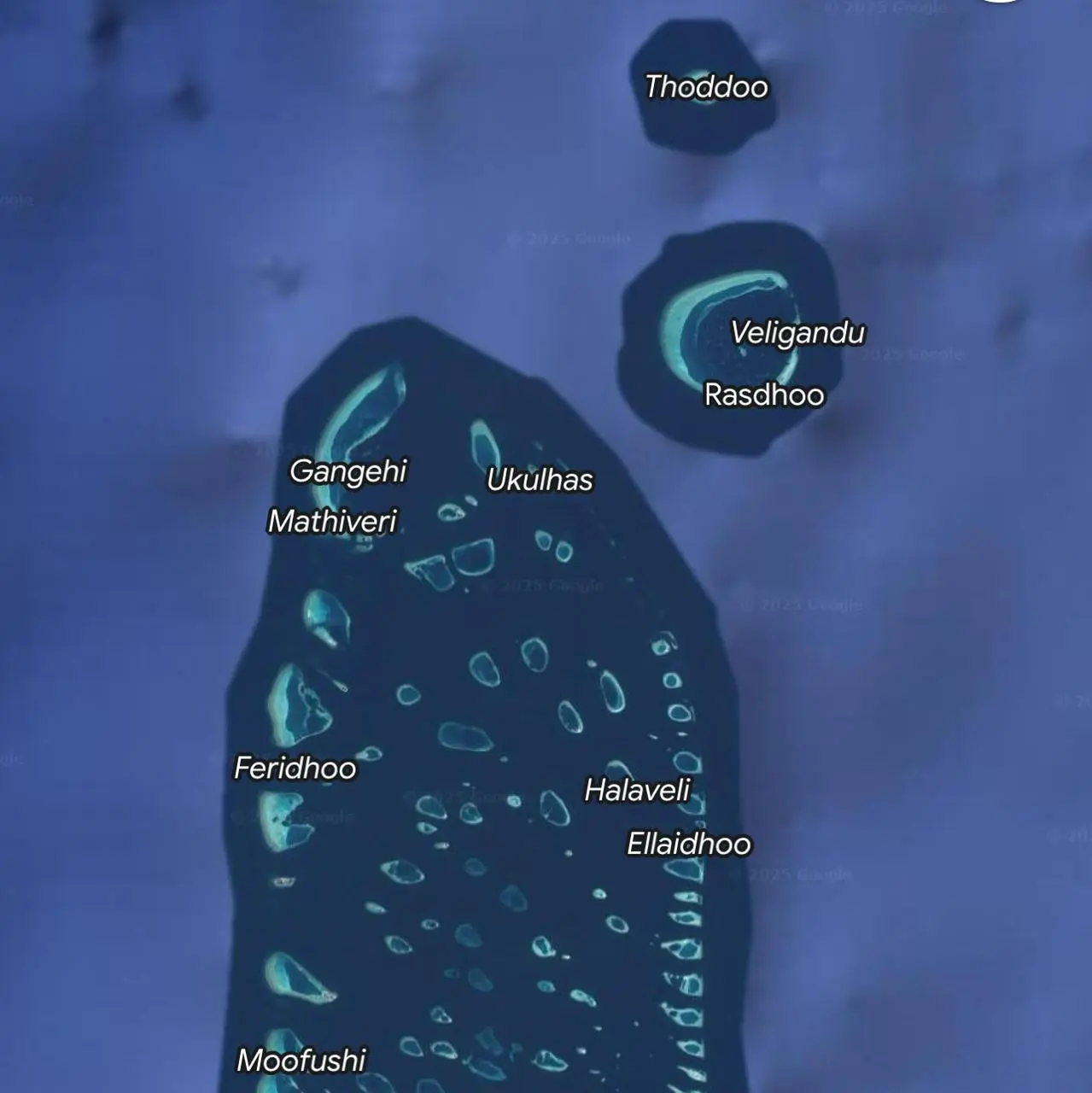
The Maldives is organized into administrative atolls, each made up of inhabited islands.
- Alif Alif Atoll8 islands
- Alif Dhaalu Atoll10 islands
- Baa Atoll13 islands
- Dhaalu Atoll6 islands
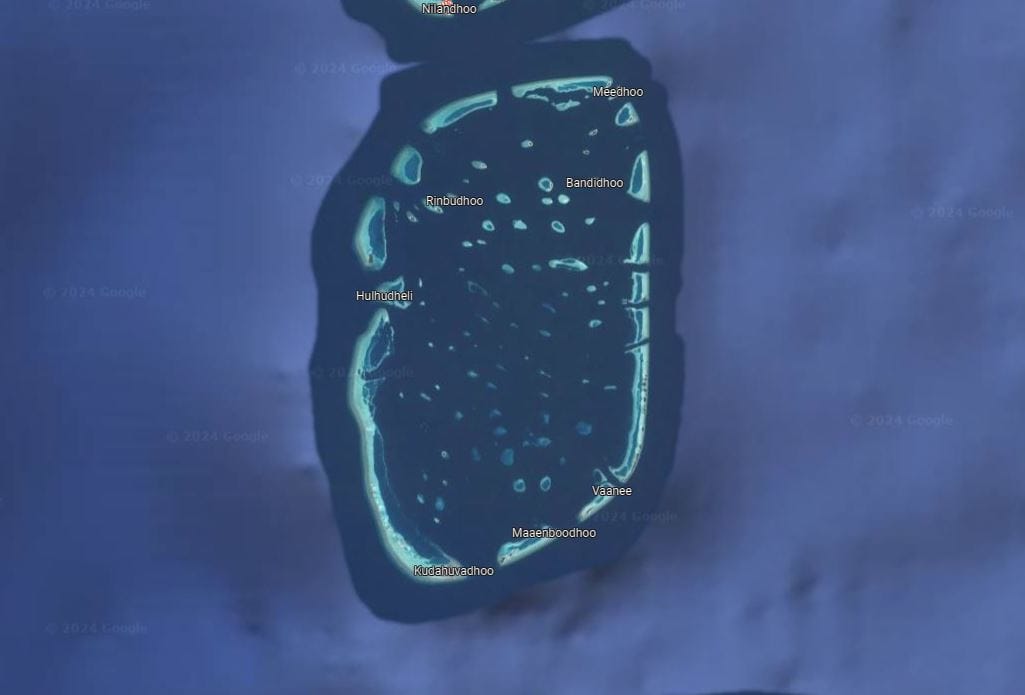
- Faafu Atoll5 islands
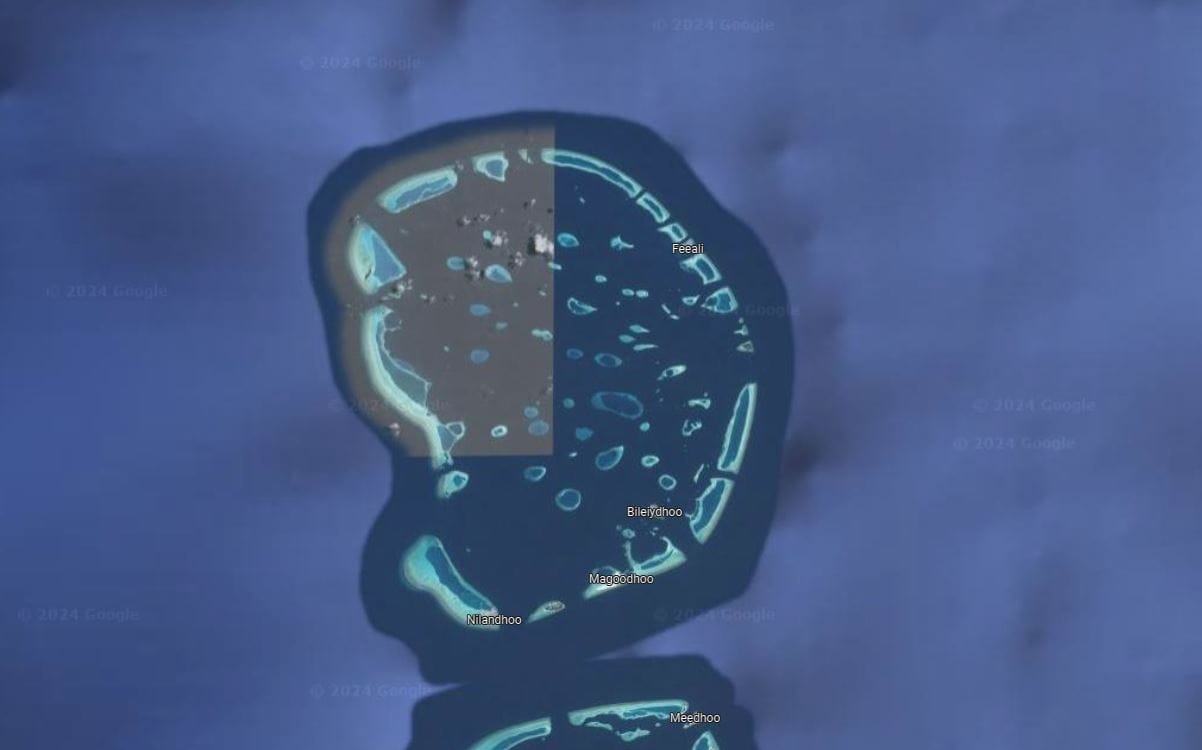
- Gaafu Alifu Atoll11 islands
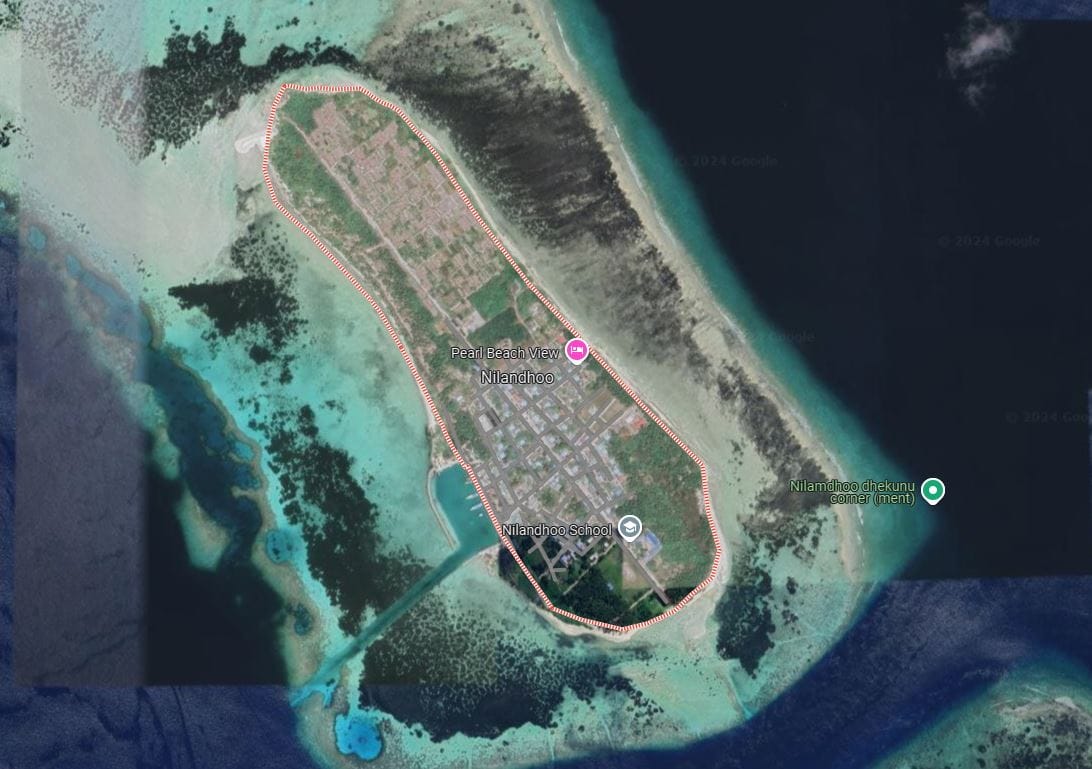
- Gaafu Dhaalu Atoll9 islands
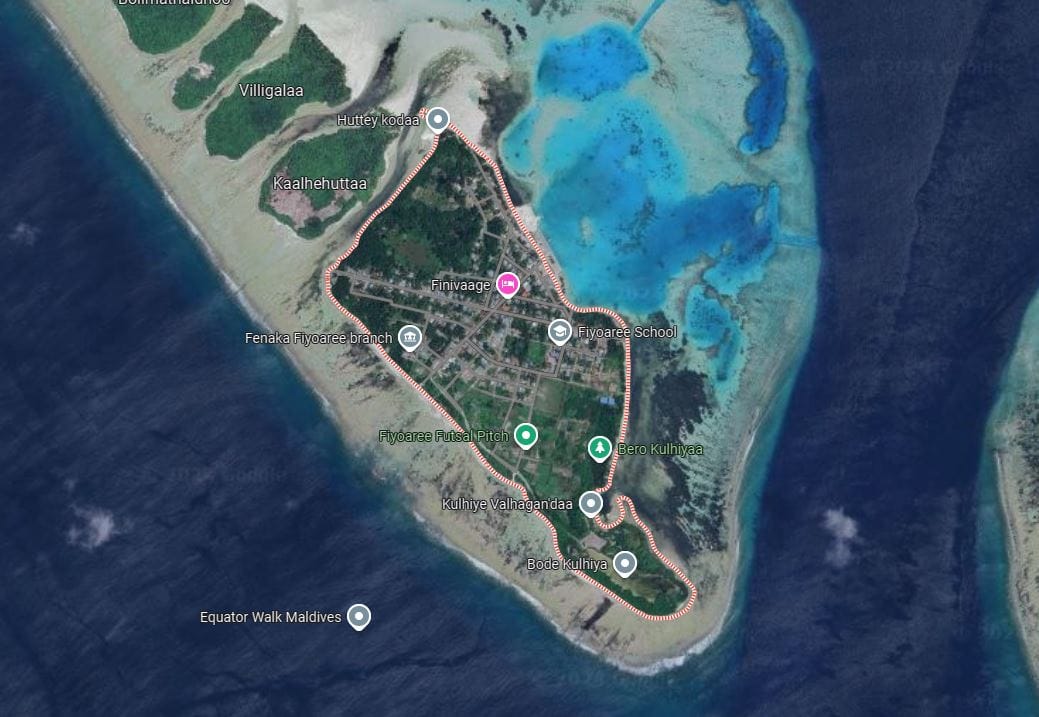
- Gnaviyani Atoll1 island
- Haa Alif Atoll14 islands
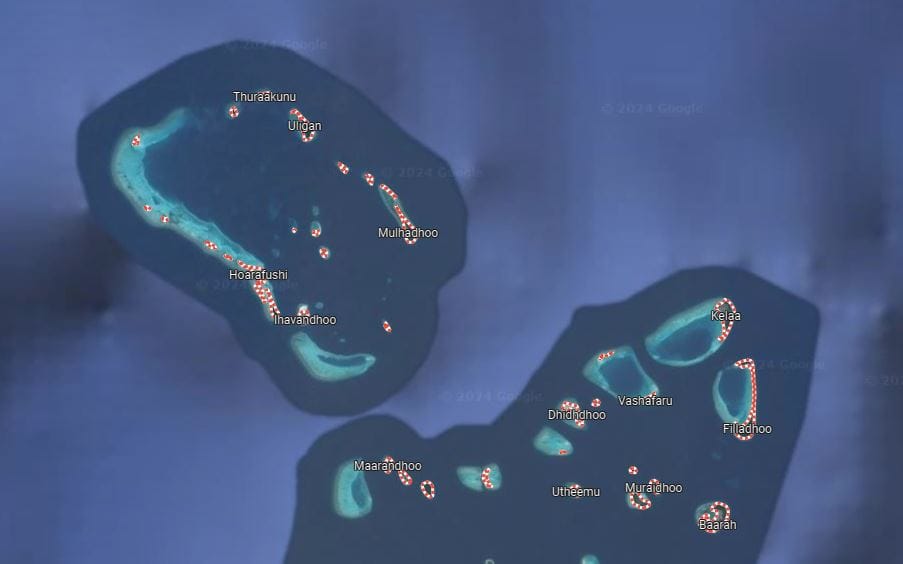
- Haa Dhaalu Atoll13 islands
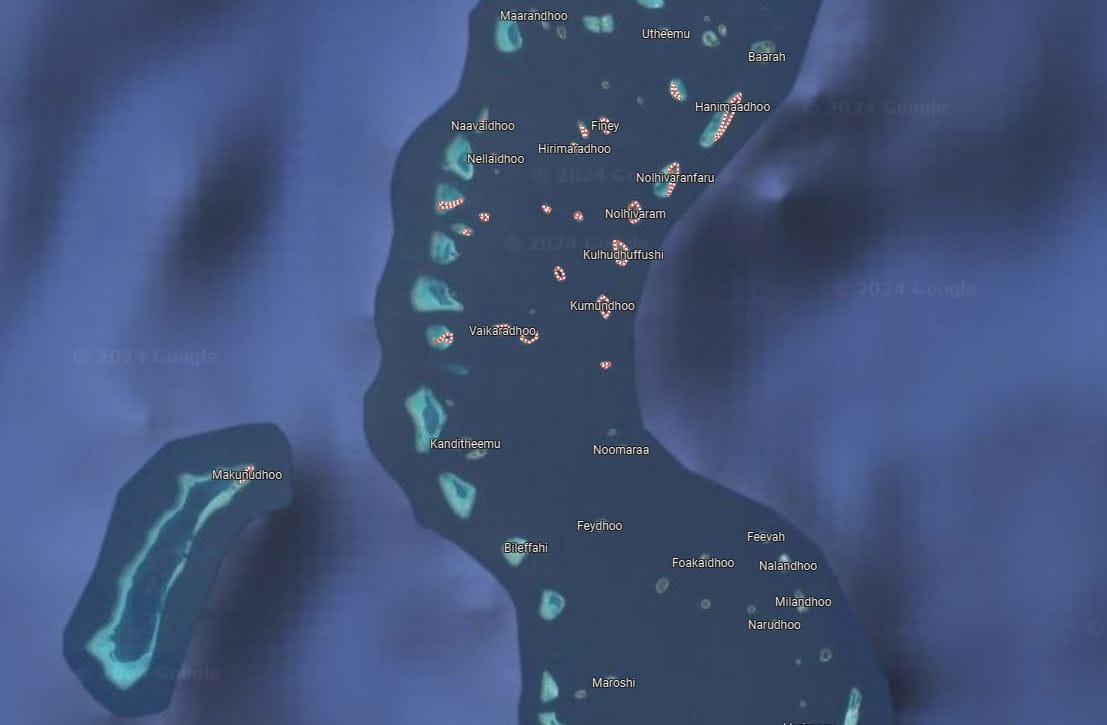
- Kaafu Atoll9 islands
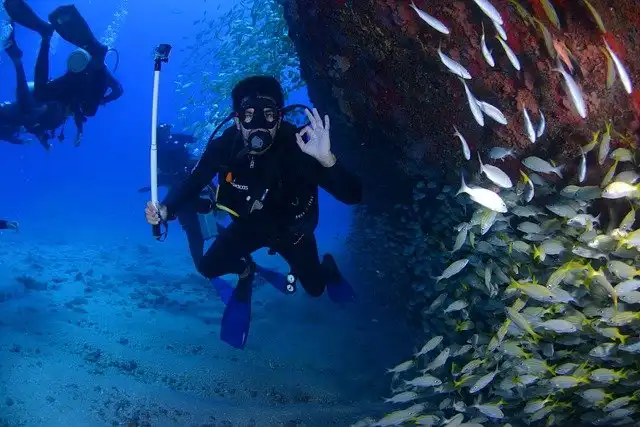
- Laamu Atoll10 islands
- Lhaviyani Atoll4 islands
- Malé City3 islands
- Meemu Atoll8 islands
- Noonu Atoll13 islands
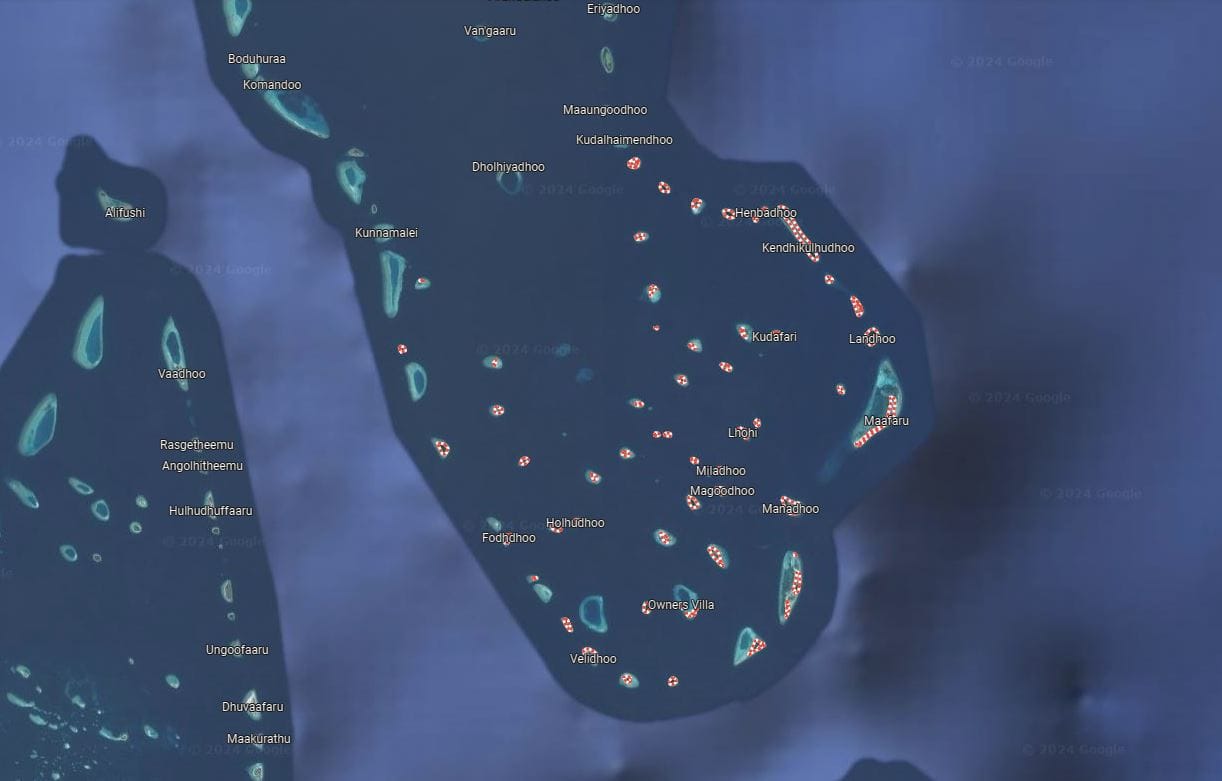
- Raa Atoll16 islands
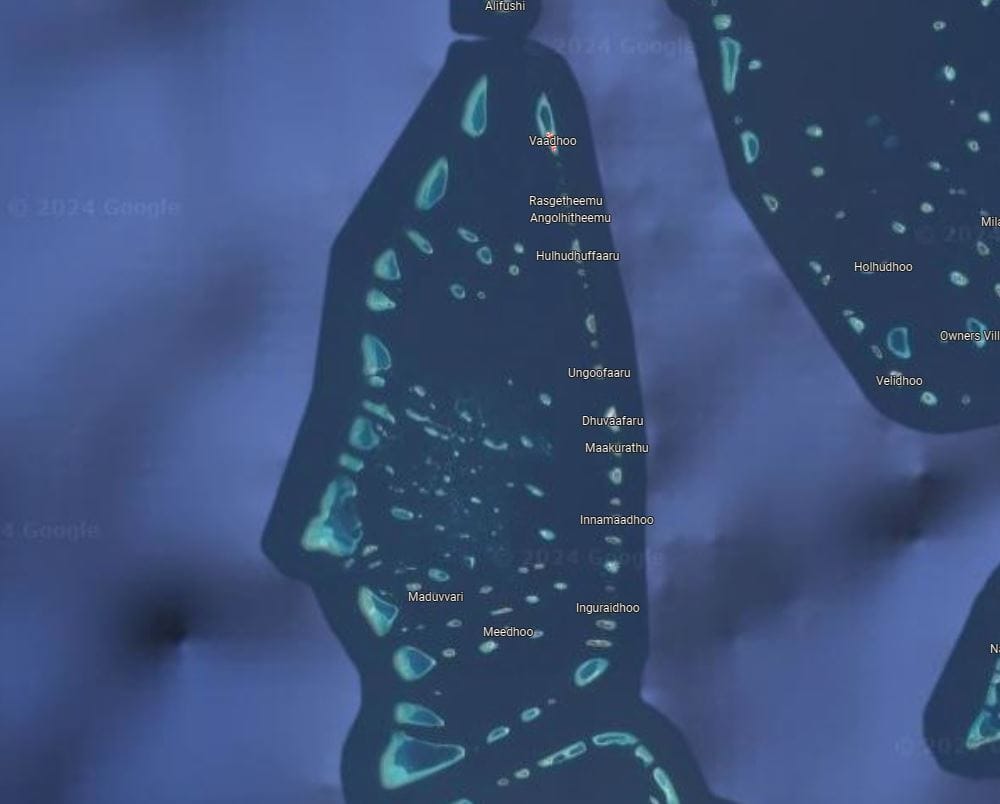
- Seenu Atoll6 islands
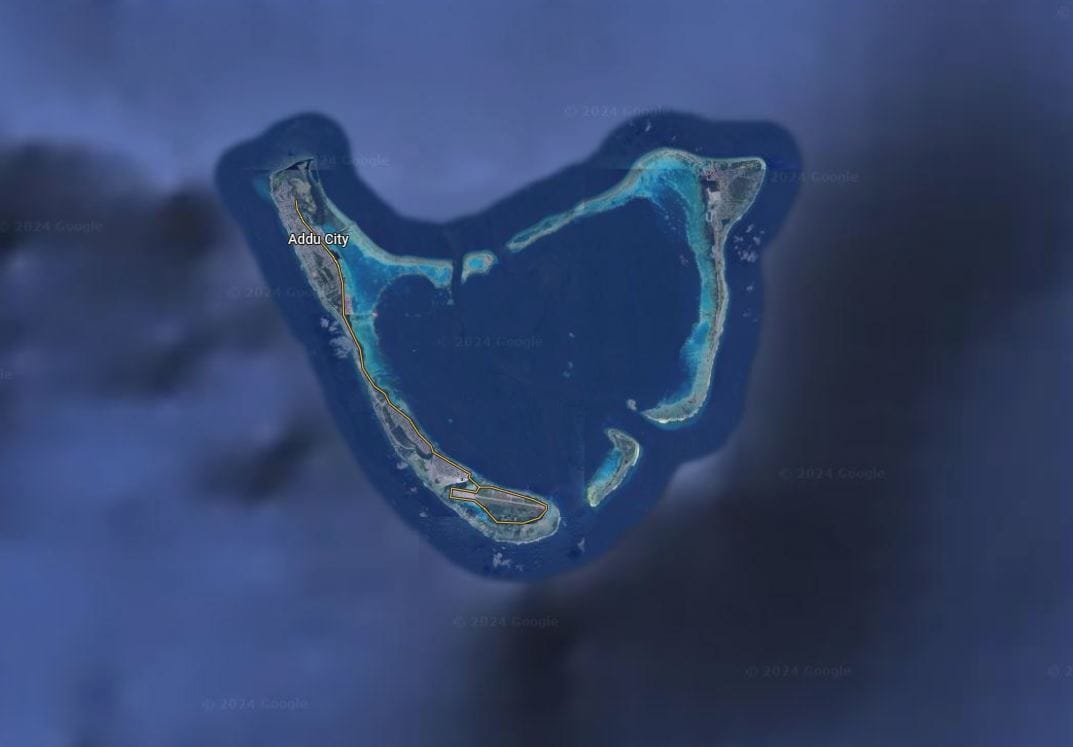
- Shaviyani Atoll14 islands
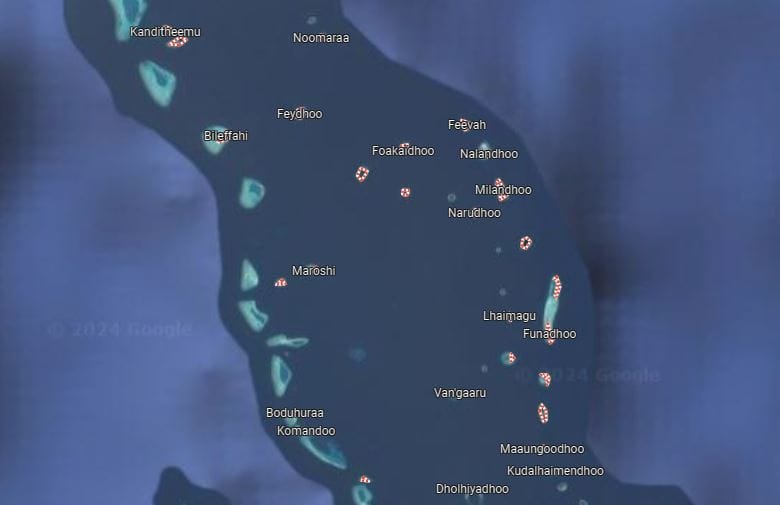
- Thaa Atoll13 islands
- Vaavu Atoll5 islands
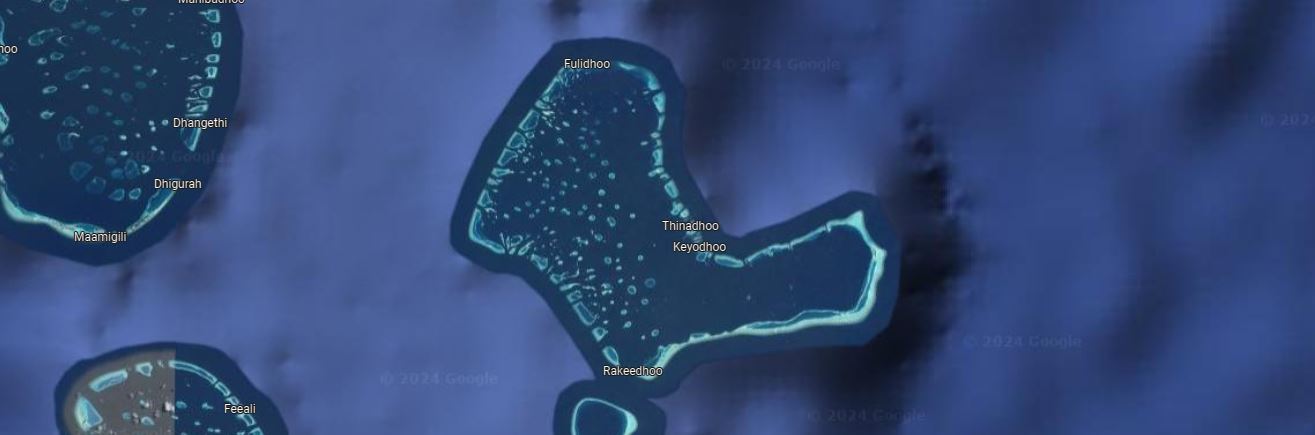
Featured local islands
A starting point, not the whole list — every inhabited island has its own page.
- Thulusdhoo
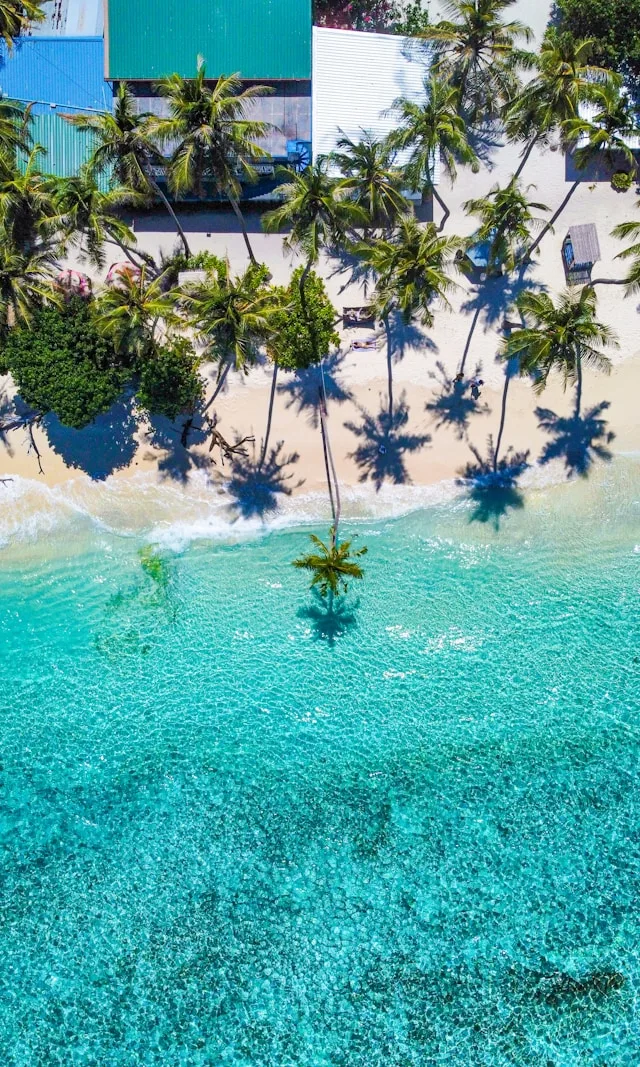
Thulusdhoo is an inhabited island in Kaafu Atoll, Maldives.
- Maafushi
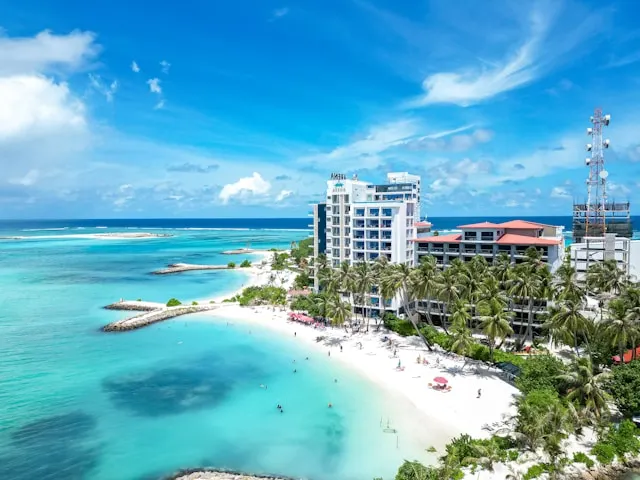
Maafushi is an inhabited island in Kaafu Atoll, Maldives.
- Dhigurah
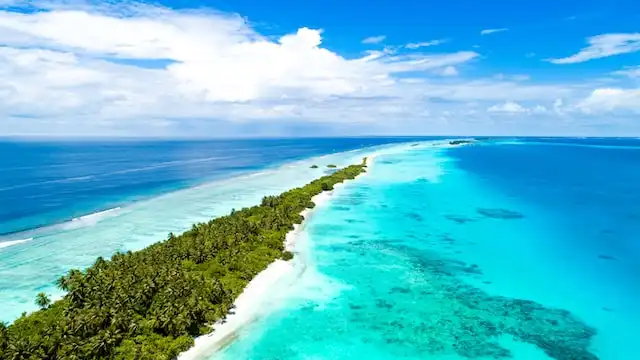
Dhigurah is an inhabited island in Alif Dhaalu Atoll, Maldives.
- Ukulhas
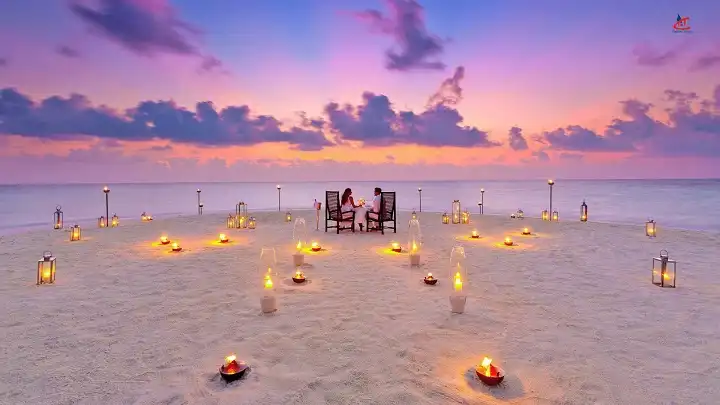
Ukulhas is an inhabited island in Alif Alif Atoll, Maldives.
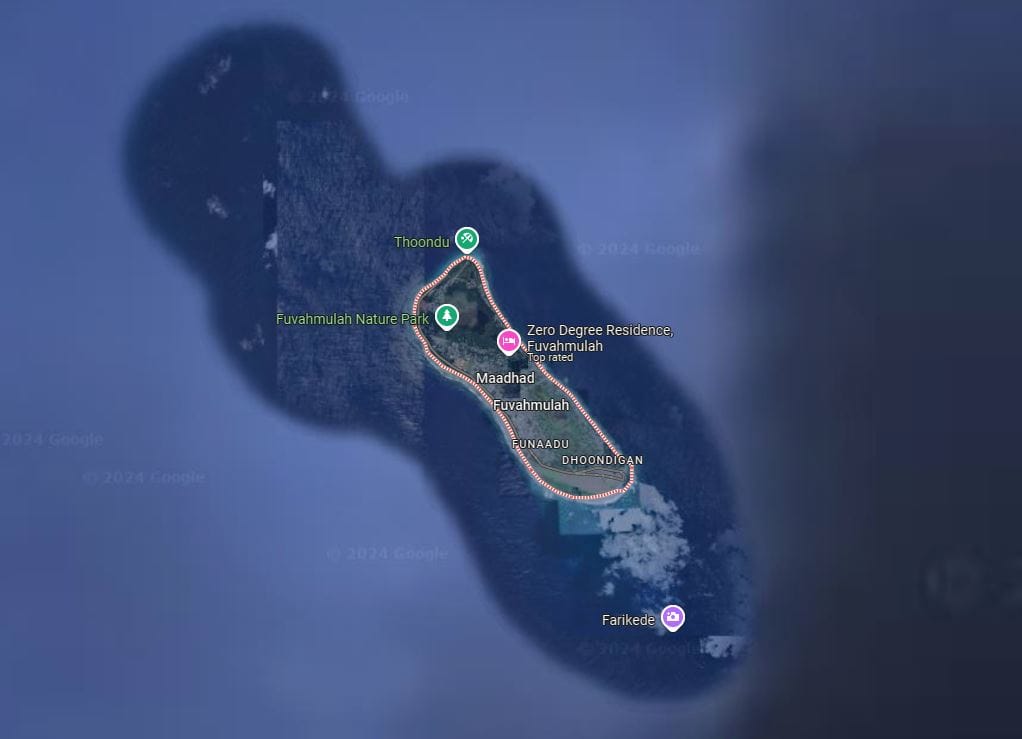
- Fuvahmulah
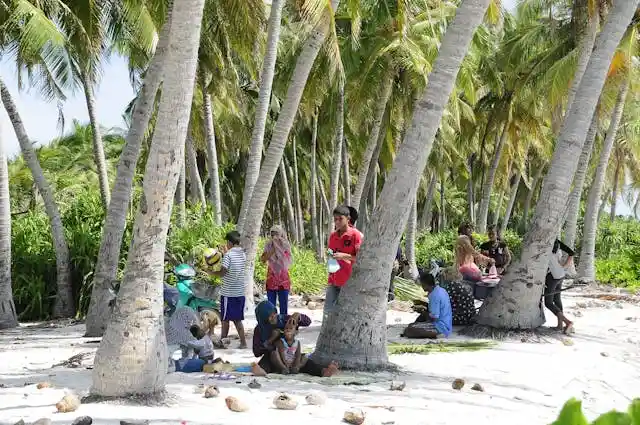
Fuvahmulah is an inhabited island in Gnaviyani Atoll, Maldives.
- Gan
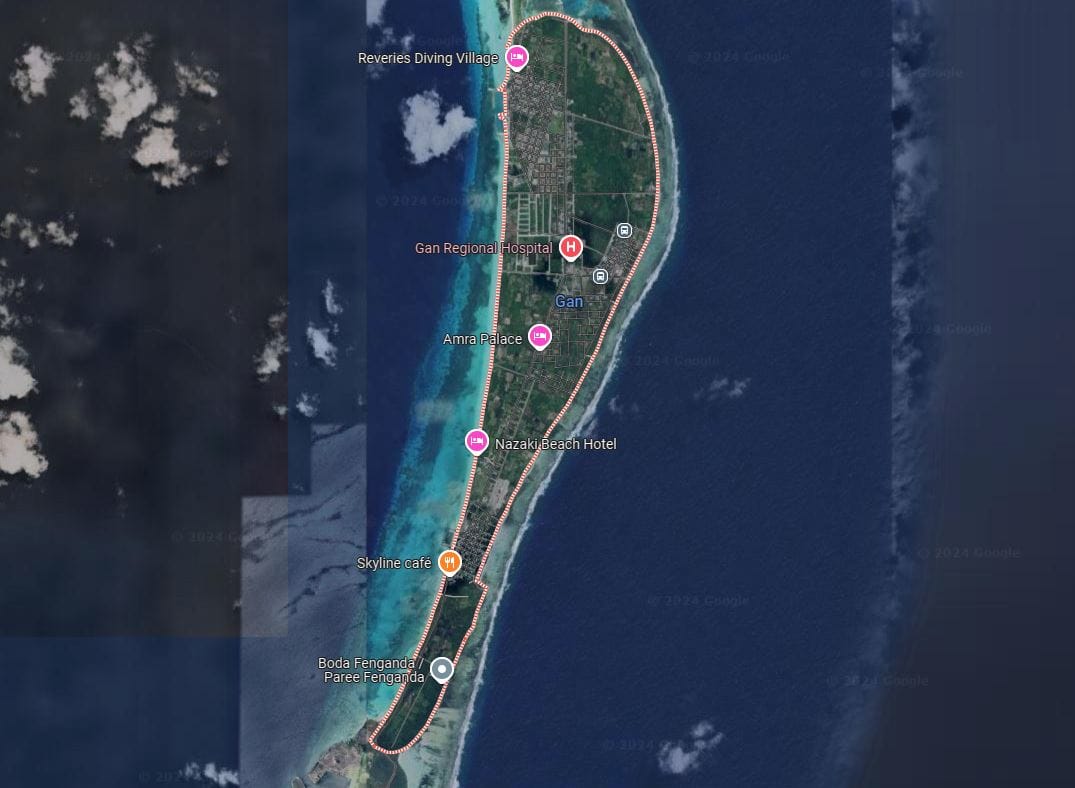
Gan is an inhabited island in Laamu Atoll, Maldives.
Maldives Local Islands
A “local island” is simply an inhabited Maldivian island that welcomes overnight guests — usually in small, independently run guesthouses rather than a single resort operator. You’ll be staying inside a real community: shops, a mosque, a school, a working harbour, and neighbours going about daily life around you.
It’s generally the more affordable way to experience the Maldives, since you pay for a room and meals rather than an entire private island. Local dress and behaviour norms are more conservative than on a resort island — swimwear is for designated “bikini beaches” only, for example — and in exchange you get easier access to real Maldivian food, culture and everyday life.
Browse every local island → or see guesthouses for places to stay on them.
Beyond the Beaches
People, Culture, History & Economy
The Maldives is more than reefs and resorts — a quick look at who Maldivians are, how they live, and how the country got here.
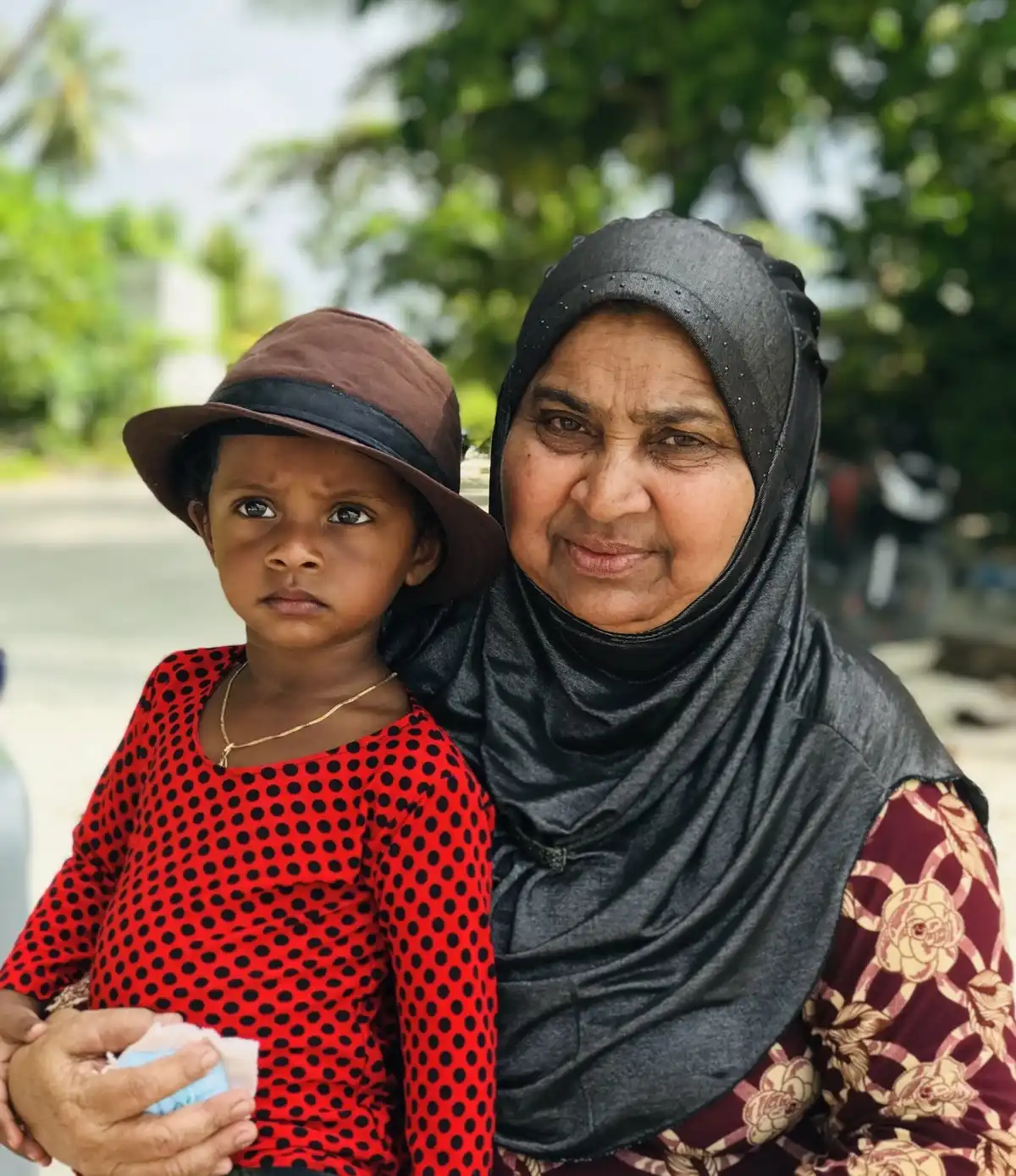
People
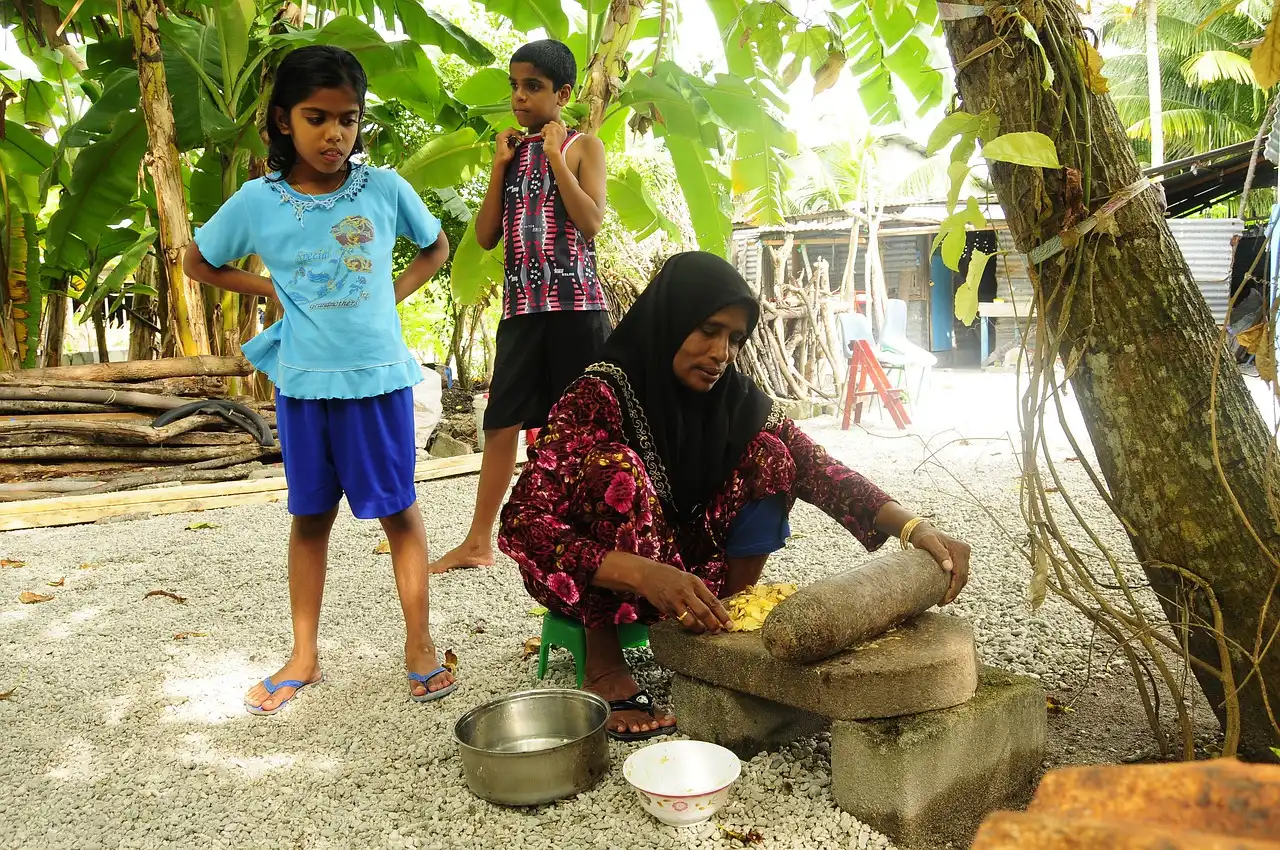
The Maldivian People
Around 520,000 people call the Maldives home, descended from South Indian, Sri Lankan, Arab and East African sailors and settlers who mixed over more than a thousand years of Indian Ocean trade. They speak Dhivehi, a language written right-to-left in the distinctive Thaana script, and the country is constitutionally 100% Sunni Muslim — Islam shapes everyday life, from the five daily calls to prayer to the Friday holiday. Close to a third of the population lives in the capital, Malé, one of the most densely built cities in the world; the rest are spread thinly across the country’s 21 atolls and 191 inhabited islands.
Community
Life on a Local Island
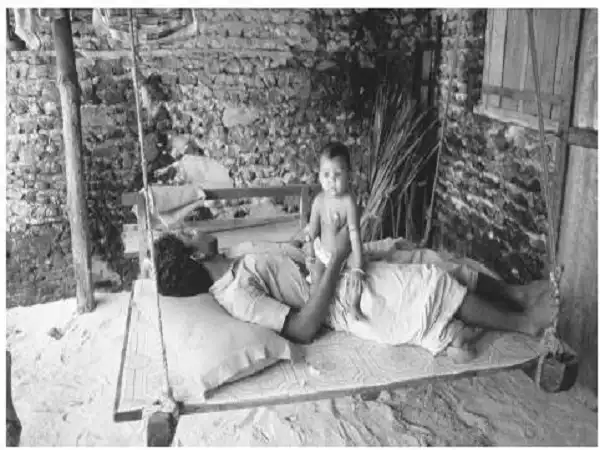
Away from the resorts, a Maldivian island is a tight-knit community built around its mosque, a harbour where the day’s catch comes in, a school, and a scatter of small shops and cafés. Many islands hold only a few hundred residents, so family and neighbourhood ties run deep, and everyone genuinely knows everyone. Dress and behaviour are more conservative than on a resort island — swimwear is kept to designated “bikini beaches” — and in return visitors get an honest look at Maldivian food, music and daily routine that a private resort island, by design, can’t offer.
History
A Short History
The islands were first settled by Buddhist seafarers over two thousand years ago, before the Maldives converted to Islam in 1153 CE under Sultan Dharumavantha Rasgefaanu — a single, unbroken sultanate followed for almost 800 years afterward. Portuguese and Dutch traders passed through the region from the 16th century, and the Maldives became a British protectorate in 1887, retaining its own sultan and internal rule throughout. Full independence came on 26 July 1965, the sultanate was replaced by a republic in 1968, and the country held its first multi-party democratic presidential election in 2008 — a history now marked each year by Independence Day and Republic Day celebrations across the islands.
Economy
How the Maldives Makes a Living
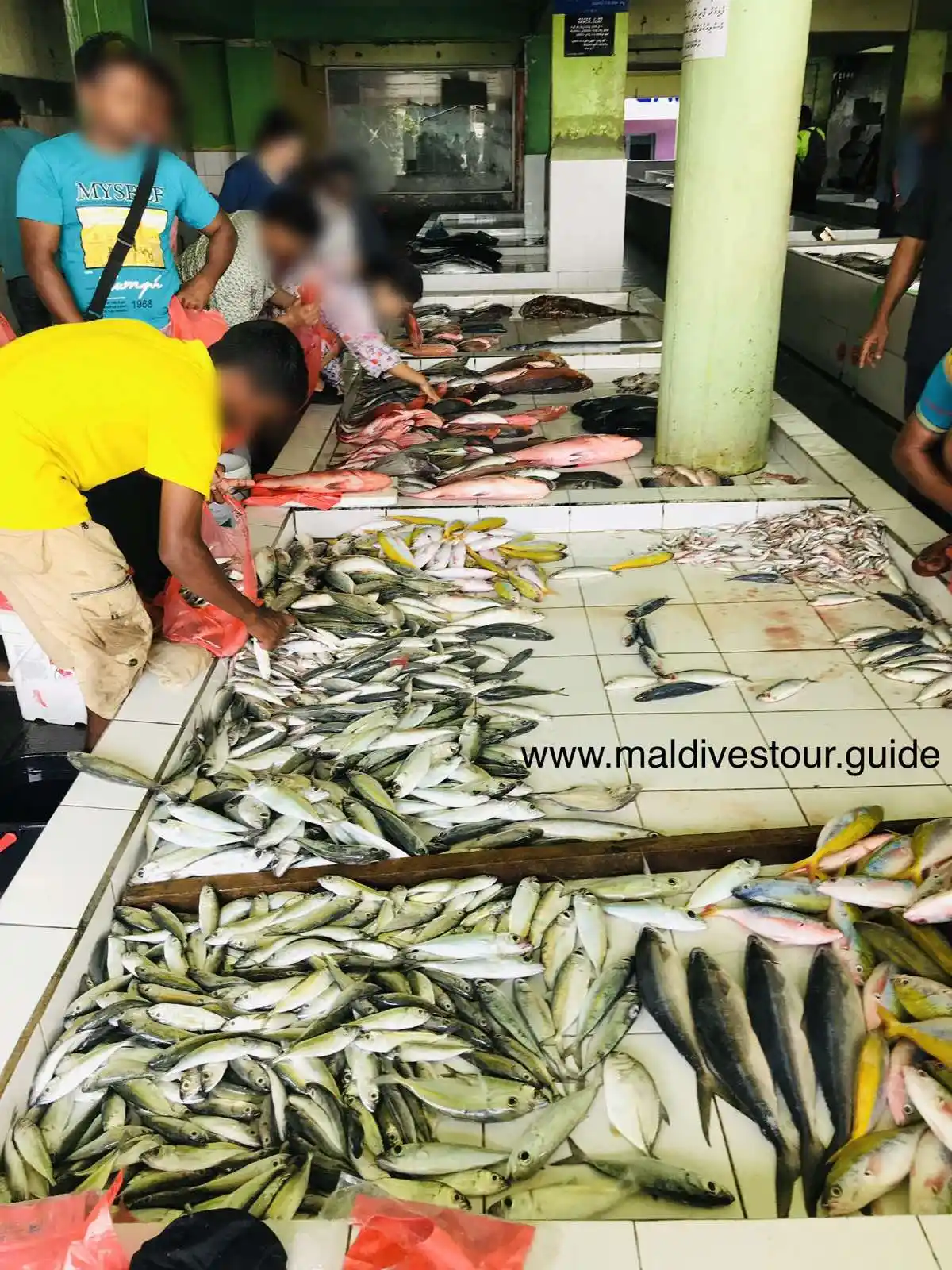
Fishing — especially pole-and-line skipjack tuna, still certified as one of the most sustainable methods in the world — was the backbone of the Maldivian economy for centuries, and tuna remains a major export today. Since the first resort opened in 1972, tourism has overtaken it to become the country’s largest industry, contributing roughly a quarter of GDP and the majority of foreign exchange earnings, directly funding the roads, ferries, airports, schools and hospitals used across the islands. Boat building, shipping and, increasingly, agriculture round out an economy still largely tied to the ocean around it.