
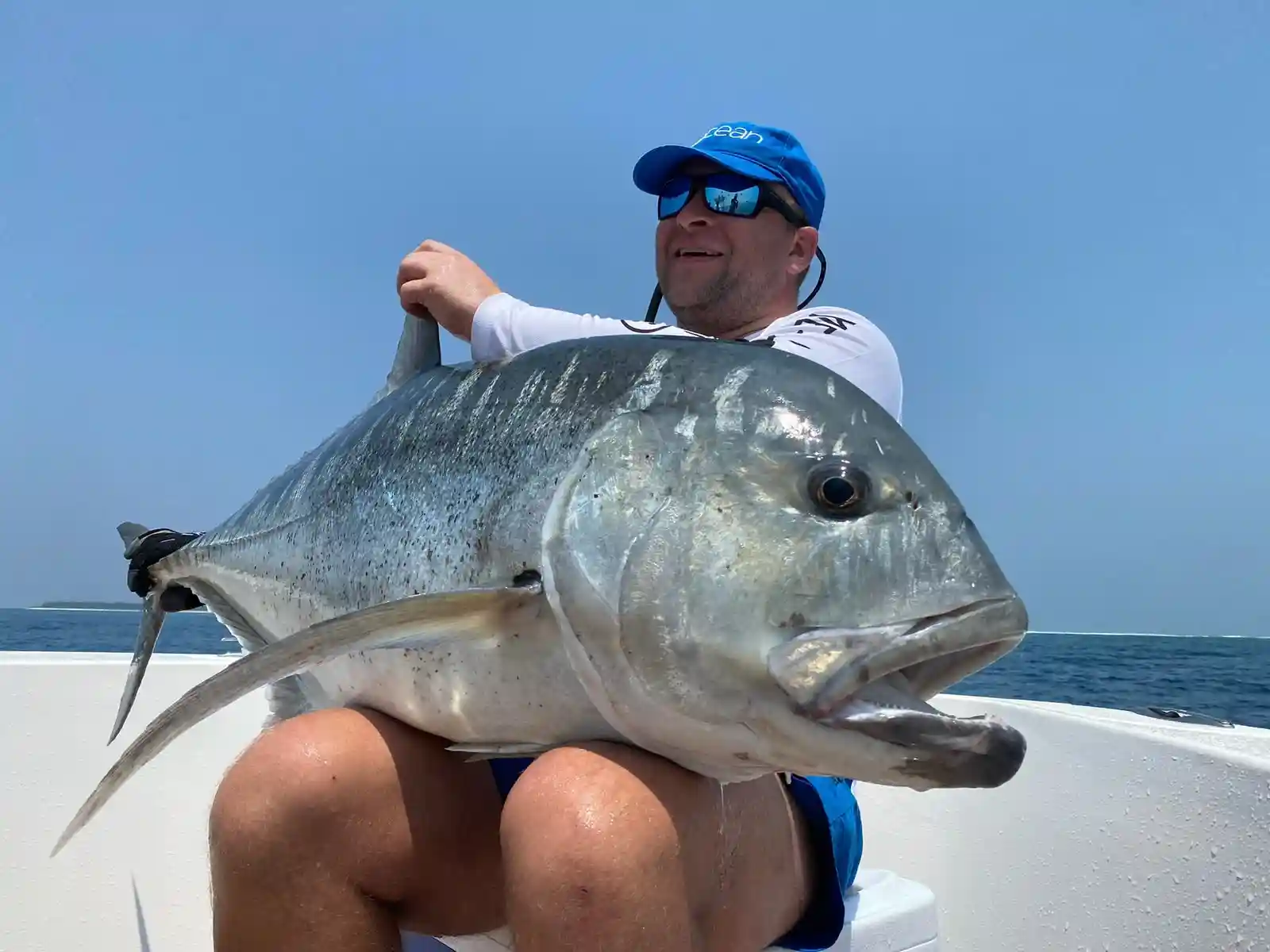
Popping and jigging are the two techniques behind most giant trevally caught on the world's reefs. Popping means casting a big surface lure and working it back so it splashes, triggering explosive strikes on top. Jigging means dropping a heavy metal jig down the reef and working it back up through the water. This guide explains how GT popping and jigging work, the tackle you need for each, how they compare, and where to try them in the Maldives, including on our own boat in Gaafu Alifu Atoll.
What is popping?
Popping is a surface fishing technique. You cast a popper or stickbait towards the reef edge, a channel mouth or a patch of feeding fish, then work it back with long sweeps of the rod. A popper has a cupped face that throws water and makes a loud "pop"; a stickbait has no cup and swims from side to side just under the surface. Both imitate a fleeing baitfish, and both draw aggressive strikes from predators hunting near the top.
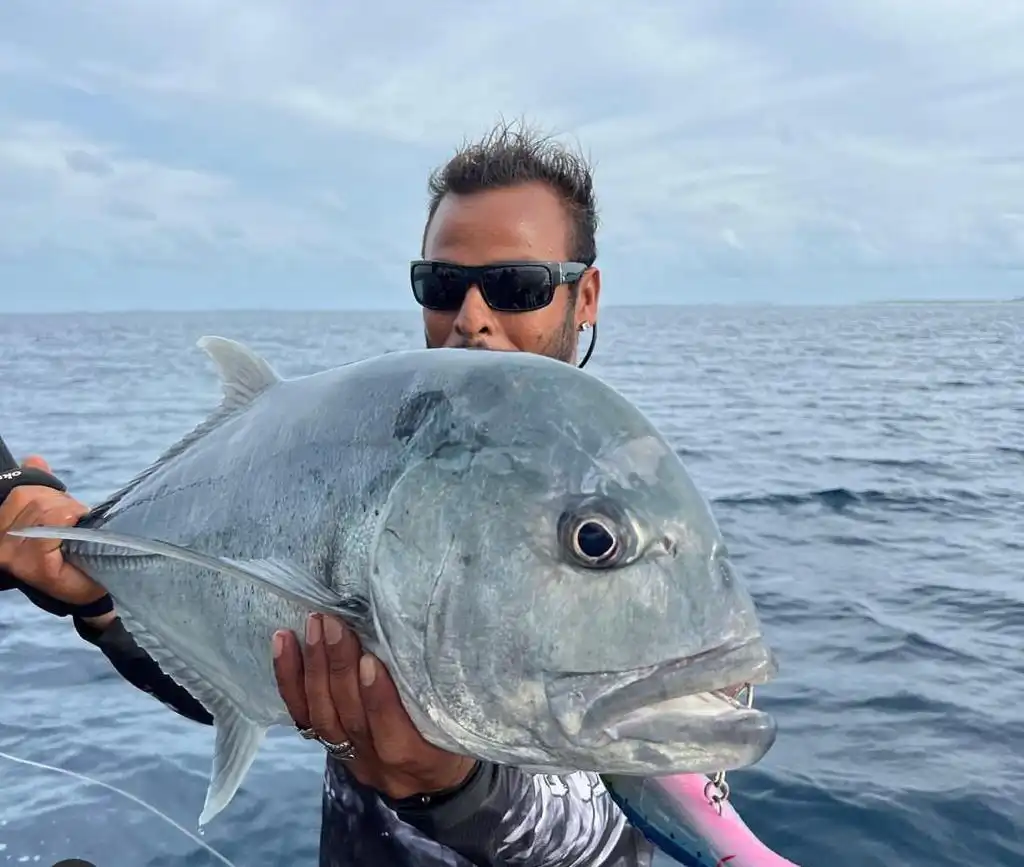
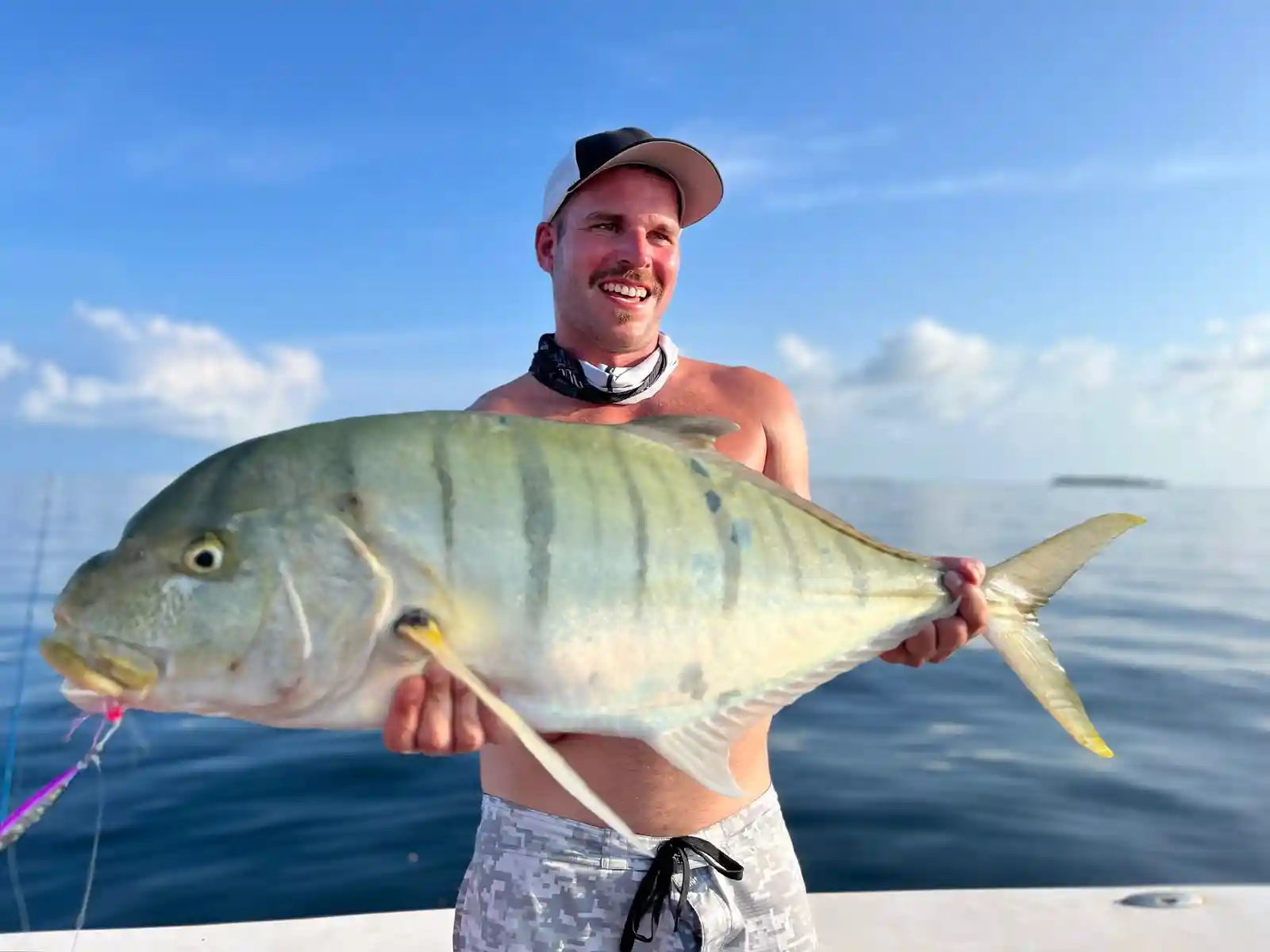
The giant trevally is the classic popping target. A GT will often follow a lure, push a bow wave behind it and then smash it in a burst of white water close to the boat. The fish then turns for the reef, and the next few seconds decide the fight. Popping also catches bluefin trevally, other trevally species, dogtooth tuna near the surface and, in open water, yellowfin tuna.
How to fish a popper
- Cast long and accurately. Aim for the reef edge, the white water where waves break over the reef, or the current line at a channel mouth. A longer cast covers more water and gives the fish more time to find the lure.
- Work the lure with the rod, not the reel. Hold the rod butt under your arm, then sweep the rod tip down or sideways to make the popper splash. Reel in the slack and repeat. Stickbaits need a smoother, longer sweep so they dive and swim.
- Keep going to the boat. GT often follow and strike late. Keep working the lure until it is almost at the boat.
- Don't strike too early. When a fish hits, keep winding until you feel the weight, then lean back. Pulling the lure away from a GT that missed it is the most common mistake.
- Stop the run. Lock the rod against your body, keep the drag tight and turn the fish away from the reef. Once it is in open water, pump and wind.
Popping is physical. A session can mean a hundred or more casts with a heavy rod and lure, so take breaks, drink water and use a gimbal or belt to take the pressure off your body.
What is jigging?
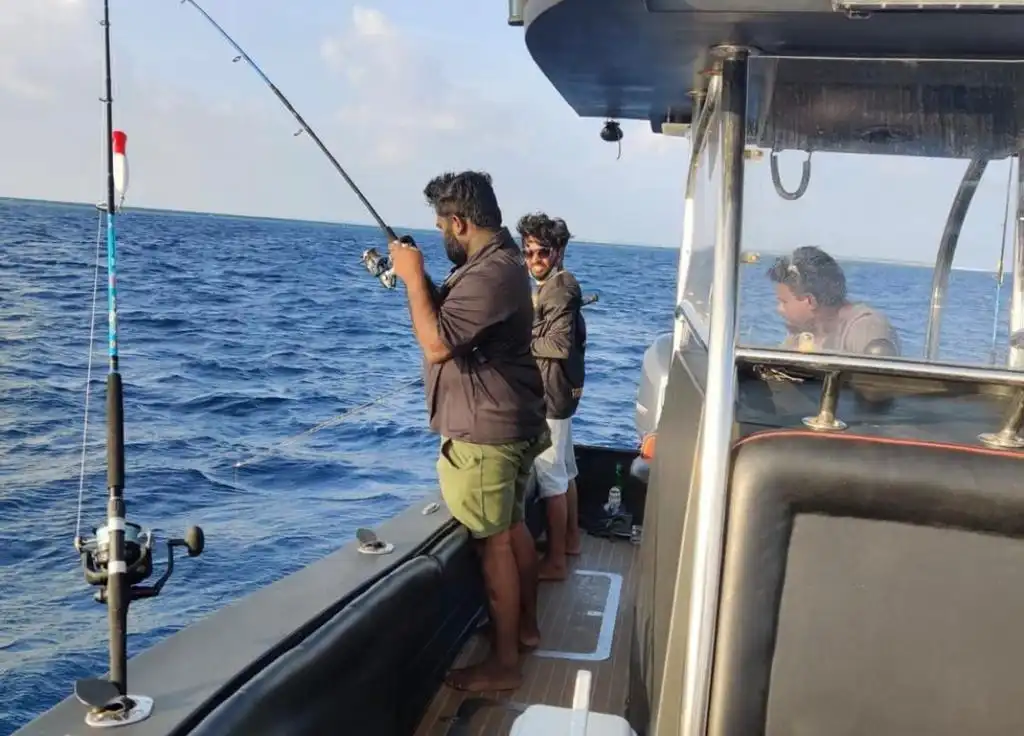
Jigging works the water column below the surface. You drop a heavy metal jig to the bottom or to the depth where fish are holding, then work it back up with a rhythm of rod lifts and turns of the reel handle. The jig darts, flutters and falls like an injured baitfish. Strikes usually come as the jig falls or just after a lift.
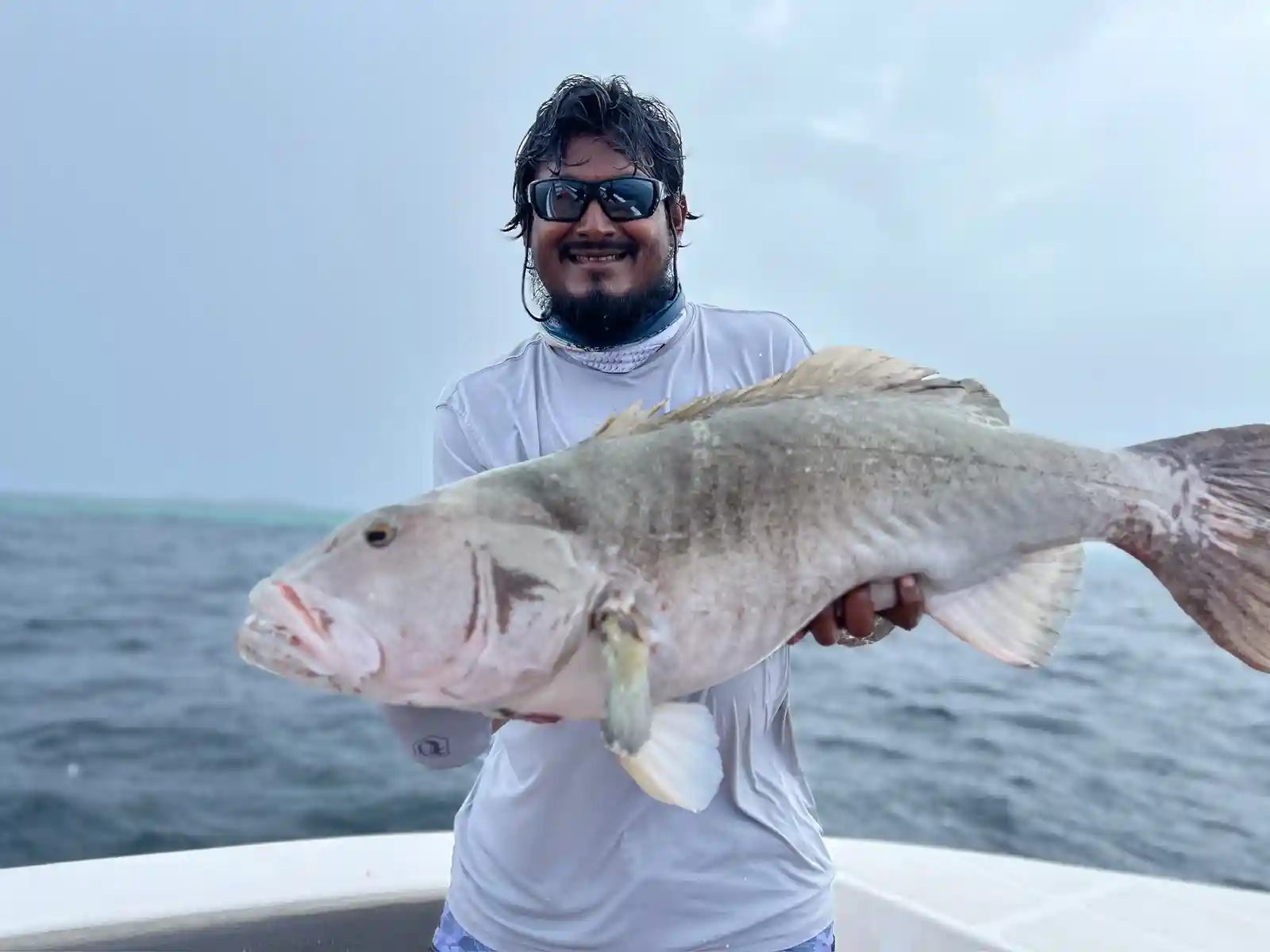
In the Maldives, jigging is done along the steep outer reef slopes and drop-offs. It catches giant trevally that aren't feeding on the surface, and it is the main way to catch dogtooth tuna, as well as groupers, snappers, amberjack and other reef fish. Because you're fishing deeper, jigging is a good choice when the surface is quiet or the sea is too rough for long casting sessions.
How to jig: speed jigging and slow-pitch jigging
- Speed (high-pitch) jigging. Fast, aggressive lifts with one or more turns of the reel per lift, using long, slim jigs. It works well for GT, dogtooth tuna and amberjack, and is tiring over a long session.
- Slow-pitch jigging. Shorter, softer lifts that let a wider, flatter jig flutter and fall slowly. It is less tiring, very effective for groupers, snappers and other bottom fish, and still catches GT and dogtooth tuna.
Whichever style you use, watch the line as the jig falls: if it stops or goes slack early, a fish has probably taken the jig. Wind down fast and set the hook.
Popping vs jigging: which is better?
| Popping | Jigging | |
|---|---|---|
| Where you fish | Surface, over reef edges and channels | Below the surface, down reef slopes and drop-offs |
| Main targets | GT, bluefin trevally, tuna | GT, dogtooth tuna, groupers, snappers, amberjack |
| Physical effort | High: repeated heavy casting | Medium (slow-pitch) to high (speed jigging) |
| Excitement | Visual surface strikes | Heavy hits in deep water |
| Best conditions | Running tide, fish active near the top | Slack water, fish holding deep, rougher days |
| Beginners | Harder to learn | Easier to start |
Most anglers do both in a day. The crew pops the reef edges and channel mouths while the tide runs, then switches to jigging when the fish go deeper or the tide slackens. If you only bring one outfit, bring a popping rod; but a day with both gives you the best chance of a GT and a mixed bag of other species.
GT popping tackle
GT tackle is heavy because the fish is strong and the reef is close. Typical popping outfits look like this:
- Rod: a GT popping rod of around 7.5 to 8.5 feet, rated for heavy braid (often around PE 6 to PE 10).
- Reel: a large saltwater spinning reel with a strong, smooth drag, sized to hold plenty of heavy braid.
- Main line: heavy braided line, commonly in the 80 to 130 lb range.
- Leader: a thick monofilament or fluorocarbon leader to survive the coral, commonly 130 lb or more.
- Lures: poppers and stickbaits, roughly 80 to 200 g, with strong split rings and heavy-duty hooks. Many anglers swap trebles for single hooks to make releasing fish easier.
- Extras: a fighting belt or gimbal, gloves for handling leader and fish, pliers, and polarised sunglasses to spot following fish.
Jigging tackle
- Rod: a jigging rod matched to the style: stiffer and longer for speed jigging, a slow-pitch rod with a softer tip for slow-pitch.
- Reel: a strong spinning or overhead jigging reel with good line capacity and a powerful drag.
- Line: thinner braid than for popping, so the jig sinks faster and you feel the bottom, with a fluorocarbon leader.
- Jigs: a selection of weights to match the depth and current, often from around 100 g up to 300 g or more in strong current, with assist hooks.
On our boat, basic fishing gear is included on every charter, and you can add a professional rod and reel setup for USD 80 per setup if you don't bring your own popping or jigging outfit.
Where to go popping and jigging in the Maldives
The Maldives is one of the best places in the world for popping and jigging. Its 26 atolls are rings of reef broken by channels, with steep outer reef walls dropping into deep blue water: ideal for both surface and deep techniques. The busy central atolls see a lot of boat traffic, so serious anglers head for the remote south.
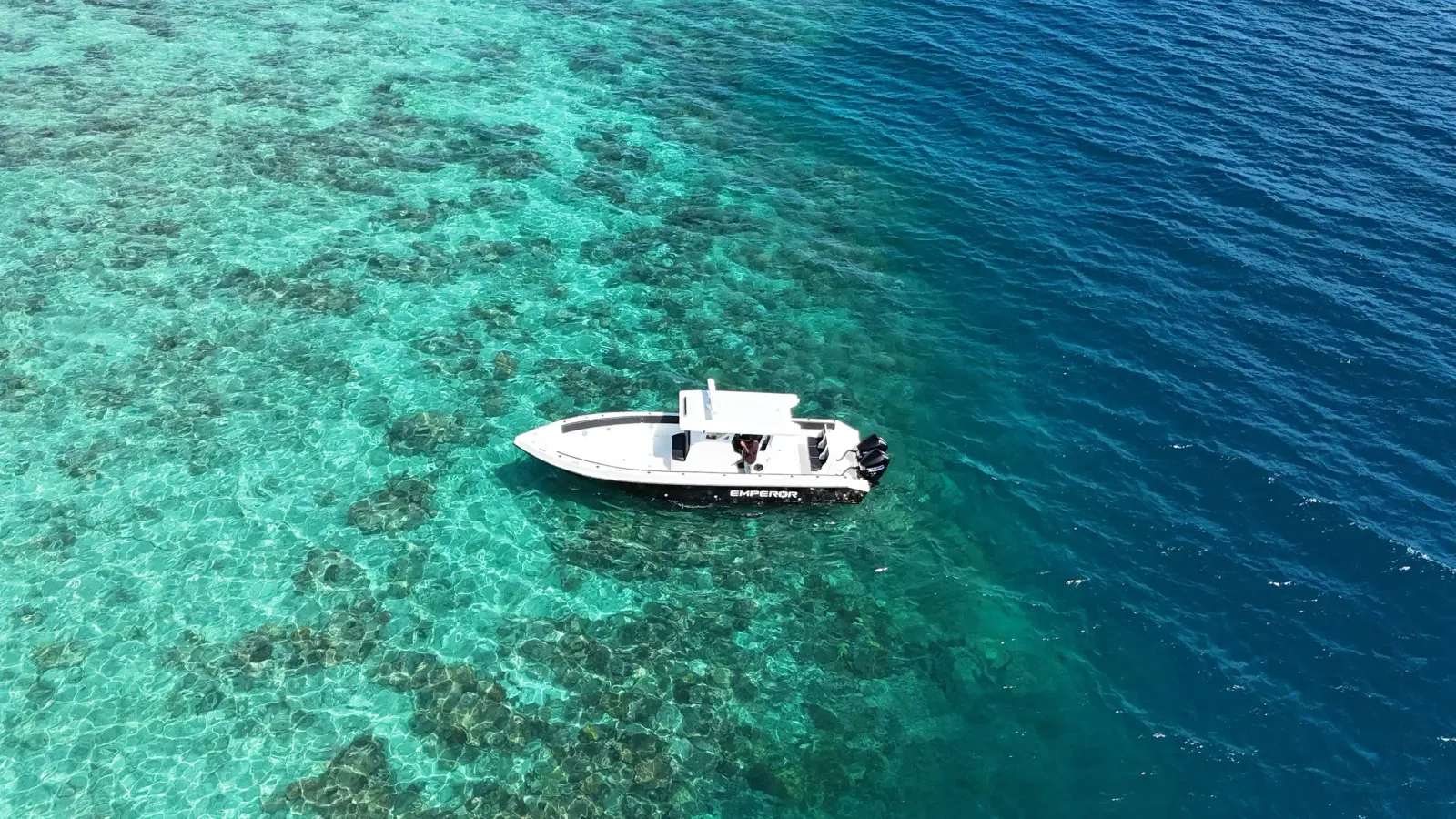
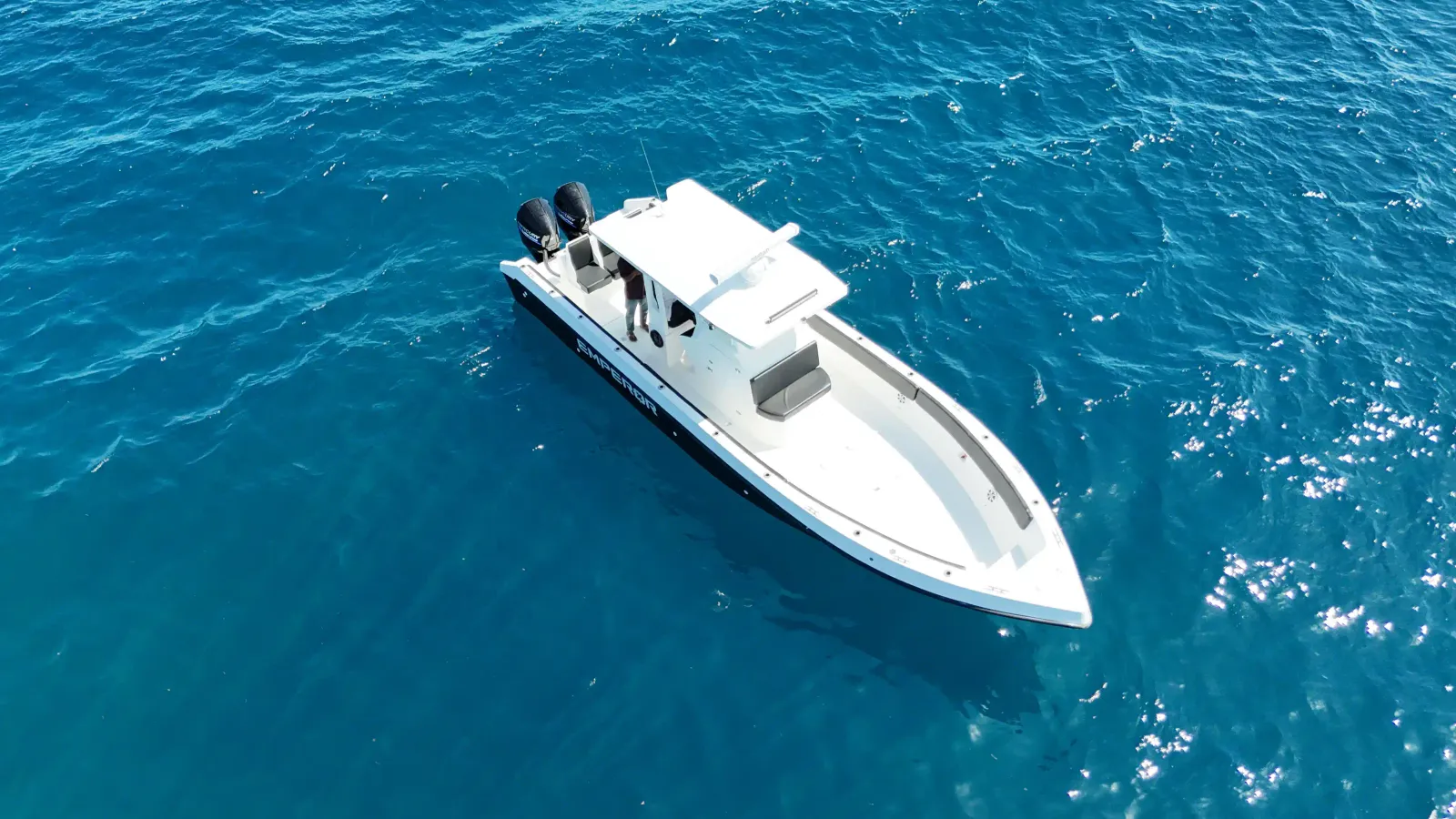
Gaafu Alifu Atoll, the northern half of Huvadhu Atoll, is one of the best. Its long outer reef is cut by many channels and fished by very few boats. Our private boat, Emperor, is based there, at the Maldives Fishing and Holidays Lodge on Maamendhoo. Emperor is a 32-foot boat with twin 200 HP engines for up to 5 anglers, and the crew fishes popping and jigging along the reef edges and channels, planning the day around the tide.
A full-day charter costs USD 1,380 per boat and a half day USD 980, including the captain and crew, fuel, soft drinks and snacks, and basic gear. With five anglers on board, a full day comes to USD 276 each.
- Private Full-Day Fishing Charter
 Fishing51 locations8 hrFrom $1,380
Popping and jigging holidays in the Maldives
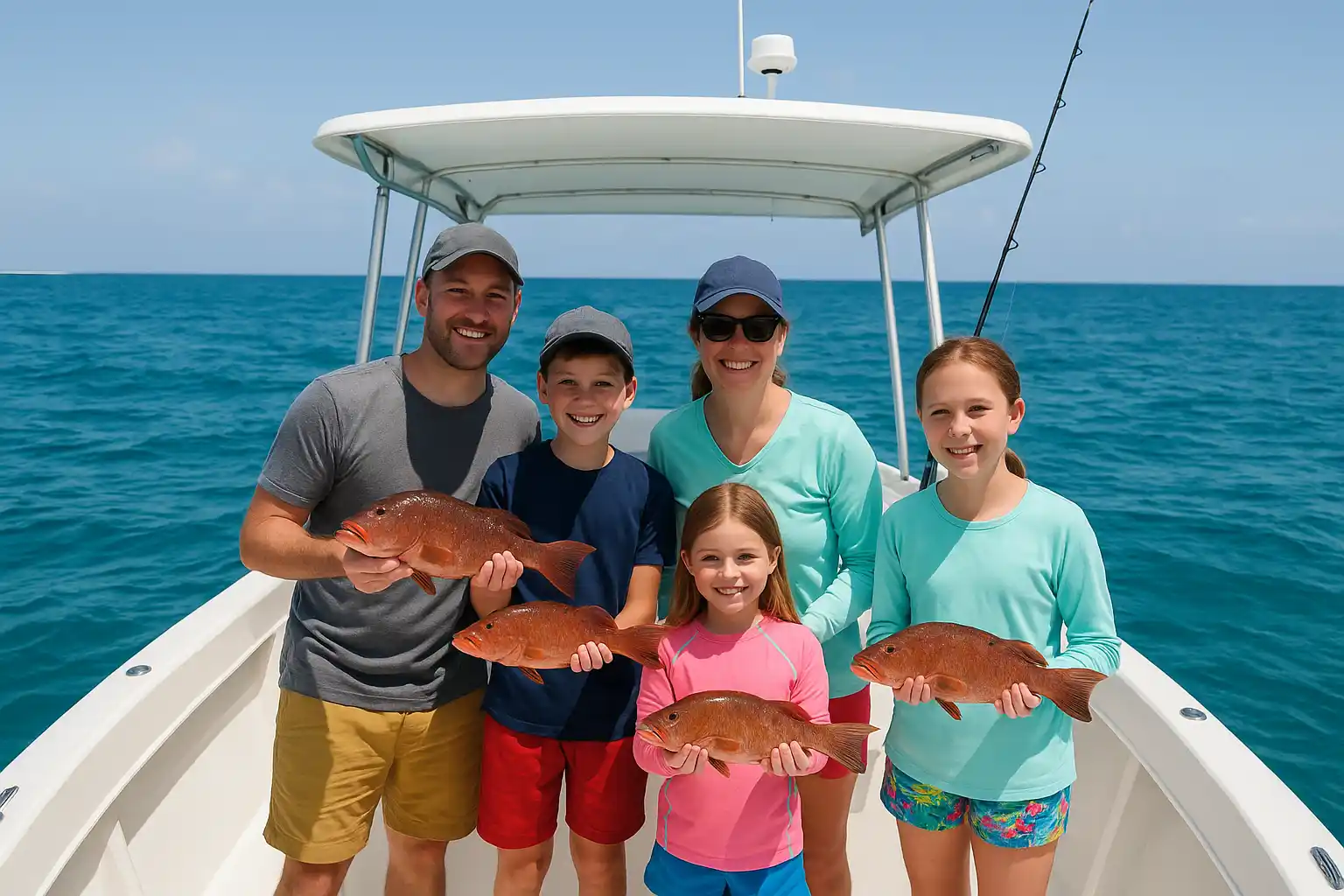
For several days of popping and jigging, our fishing packages at the lodge on Maamendhoo include full-board accommodation, the return domestic flight, the boat transfer and a private Emperor charter on every fishing day. A 6-night package with 5 full fishing days costs USD 4,420 per person for 2 anglers or USD 2,170 per person for 5.
 MaamendhooFishing Holiday Packages6 Nights / 5 DaysFrom $2,170 per person
- Stay at Maldives Fishing and Holidays Lodge
- Private Full-Day Fishing Charter
- Based in Maamendhoo
See all fishing packages, our guide to GT fishing in the Maldives, and the best time to fish in the Maldives. If you're comparing places, read our guide to the best popping and jigging destinations.
Best time for popping and jigging in the Maldives
You can pop and jig in the Maldives all year. The season most commonly reported for GT is April to October, through the southwest monsoon, while dogtooth tuna are most often caught by jigging from November to April. Day to day, the tide matters more than the month: GT come onto the reef edges and channel mouths when the water is moving, so the best popping is usually on a running tide, and slack water is a good time to jig. See the Maldives fishing calendar for every species.
Popping and jigging tips for your first trip
- Practise casting before you travel. Casting a heavy popper accurately is a skill; an hour in a field or on a beach makes a big difference.
- Get fit for it. Shoulder, back and core strength help with both casting and fighting fish.
- Check your knots and rings. GT find every weak point. Retie leaders after every big fish and replace rusty split rings and hooks.
- Listen to the crew. They know where the fish sit on each tide and when to switch from popping to jigging.
- Release with care. Use single or barbless hooks, keep fights short, support the fish horizontally for photos and revive it in the water before letting go.
Popping and jigging: FAQs
What is the difference between popping and jigging?
Popping is casting a surface lure and making it splash to trigger strikes on top. Jigging is dropping a heavy metal jig down the reef and working it back up through deeper water.
Is popping or jigging better for GT?
Popping is the classic GT technique and produces the most spectacular strikes. Jigging catches GT that aren't feeding on the surface. Most anglers use both in a day.
Can beginners try popping and jigging?
Yes. Jigging, especially slow-pitch, is the easier place to start. Popping takes practice and fitness, but beginners can learn the basics in a session.
What weight jig should I use in the Maldives?
It depends on the depth and current. Many anglers carry jigs from around 100 g to 300 g or more, using heavier jigs in deep water and strong current.
Do I need to bring my own popping gear?
No. Basic gear is included on our charters, and a professional rod and reel setup for popping or jigging is USD 80 per setup. Many experienced anglers prefer to bring their own outfit.
Where is the best place for popping and jigging in the Maldives?
The remote southern atolls, where channels and outer reef walls see little fishing pressure. Our boat, Emperor, is based in Gaafu Alifu Atoll for that reason.