
Long before the first resort opened, the Maldives lived from the sea. Fishing fed every island, filled the trading boats that sailed across the Indian Ocean, and shaped the country's food, boats and calendar. Much of that tradition is still alive today: Maldivian fishermen still catch tuna one fish at a time with poles and lines, still fish reefs with handlines at dusk, and still bring the catch to the fish market every afternoon. This guide explains traditional Maldivian fishing and how visitors can experience it.
Fishing in Maldivian history and culture
With little farmland and the ocean all around, fish, especially tuna, has always been the main source of protein in the Maldives. Fishing was the country's main occupation for centuries, and on many local islands it still is. Tuna was also an important export: cured, smoked and dried skipjack, known as "Maldive fish", kept for months without refrigeration and was traded across the Indian Ocean, especially to Sri Lanka and South India, where it is still used in cooking.
Fishing also shaped island life. Boats left at dawn and returned in the afternoon, the catch was shared across families, and knowledge of reefs, currents, bait and weather was handed down from one generation to the next.
The dhoni: the Maldivian fishing boat
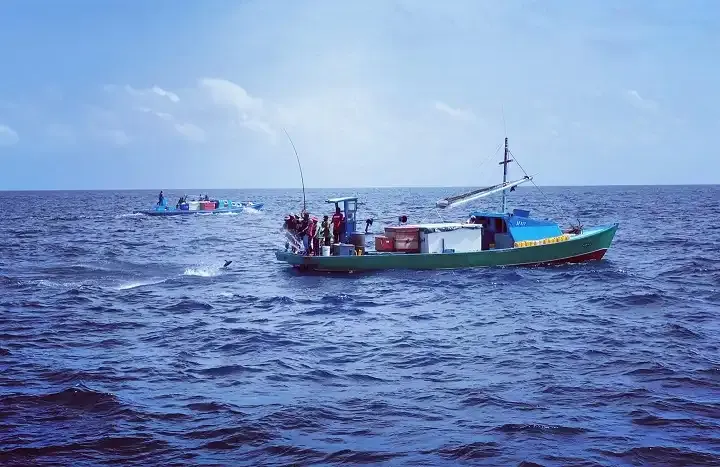
The dhoni is the traditional Maldivian boat: long and narrow, with a high, curved prow. Dhonis were once built from coconut palm wood and sailed with a single sail; today most are motorised and many are built from modern materials, but the shape is still recognisable across the islands. Fishing dhonis have a wide, open deck at the stern where the fishermen stand to fish, and tanks or holds to keep live bait and the catch.
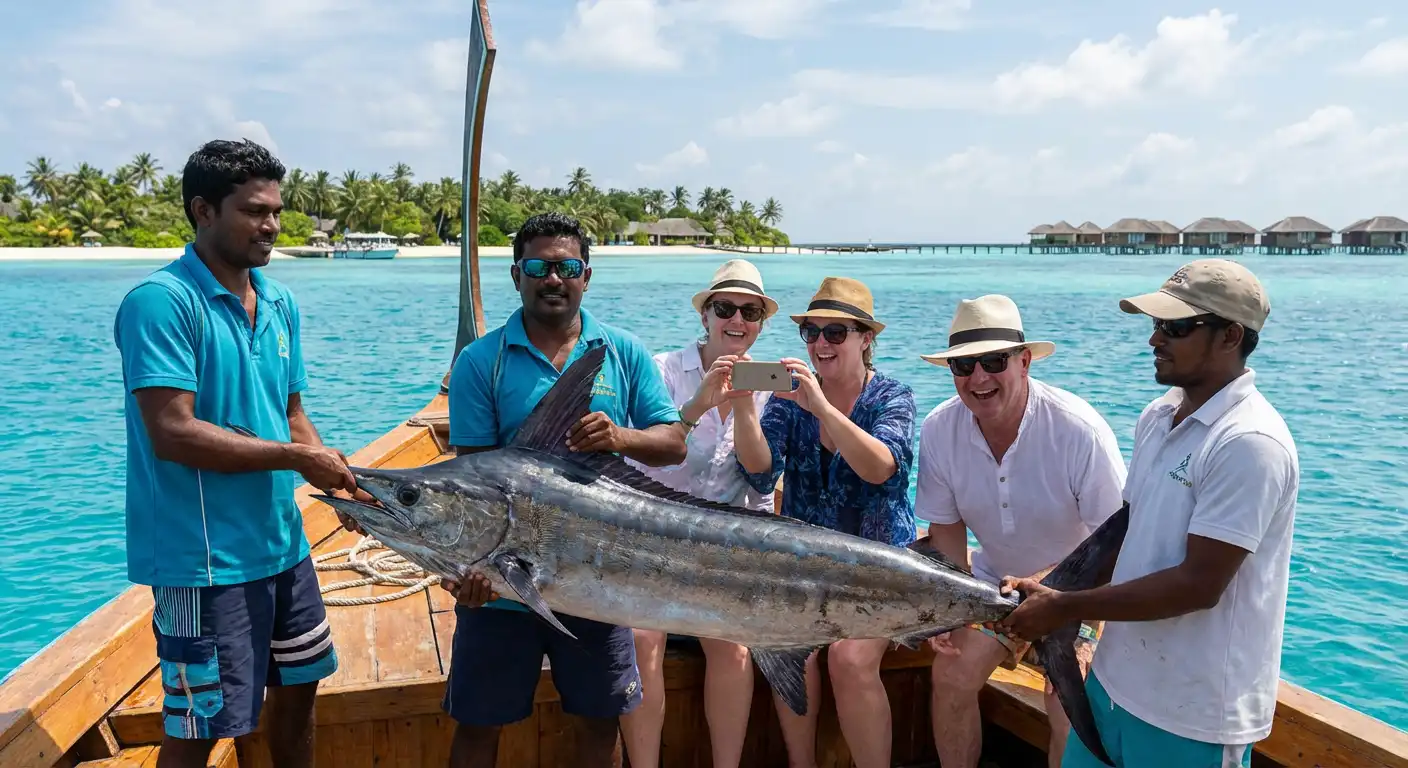
Dhonis are still used for fishing, ferrying people and goods between islands, and taking visitors on excursions, including sunset fishing trips.
Pole-and-line tuna fishing
Pole-and-line fishing is the best-known Maldivian fishing method and is still used today to catch skipjack and young yellowfin tuna. It works like this:
- Catching live bait. Before going after tuna, the crew catches small baitfish on the reef and keeps them alive in the boat's bait tanks.
- Finding a school. The dhoni searches the open sea for signs of tuna: diving seabirds, splashing fish or floating objects.
- Chumming. When a school is found, the crew throws live bait into the water and sprays water onto the surface, which makes the tuna think a big school of baitfish is feeding and drives them into a frenzy.
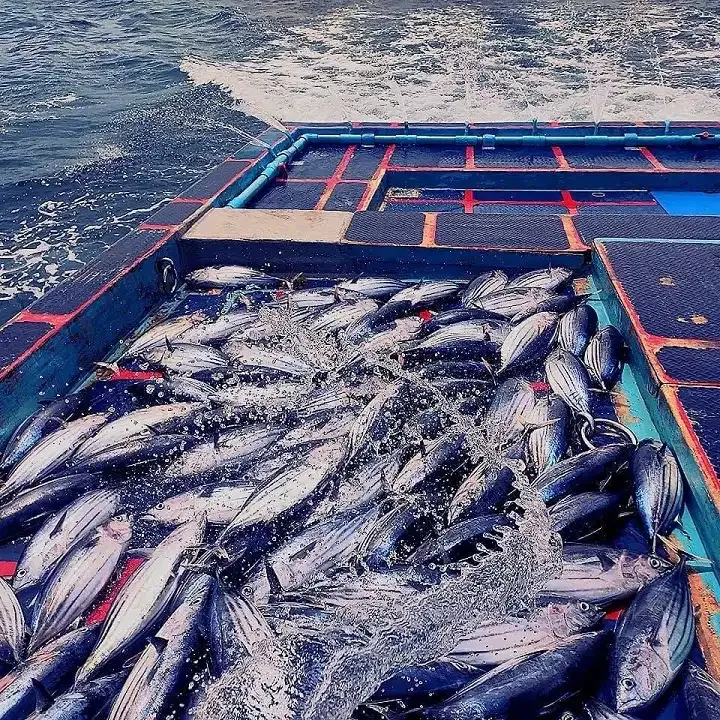
- Fishing. The fishermen, standing at the stern, use short poles with a line and a barbless hook. As each tuna bites, they swing it straight onto the deck in one movement, the hook falls free, and the line goes back in the water.
Because fish are caught one by one with hooks, not nets, there is very little bycatch of other species. That is why Maldivian pole-and-line tuna is widely regarded as one of the most sustainable kinds of tuna fishing in the world.
Handline fishing
Handline fishing is the simplest and most widespread traditional method: a single line with a hook and a weight, held in the hand rather than on a rod. Fishermen drop the line to the reef or into deeper water and feel for the bite through their fingers. Handlines are used for reef fish such as groupers, snappers and emperors, and, in deeper water, for larger fish including yellowfin tuna.
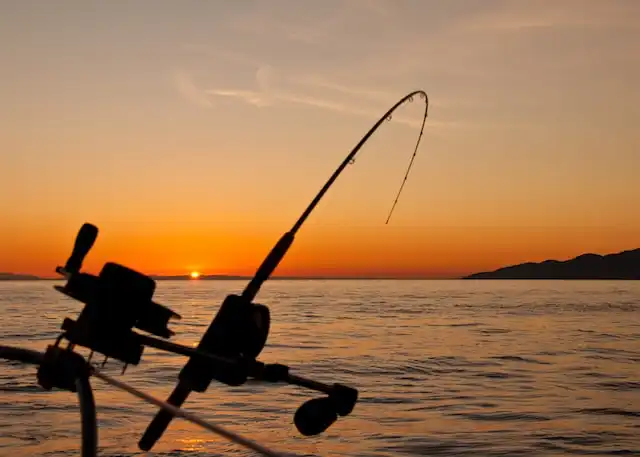
Handline fishing is also what most visitors try first. On a sunset fishing trip, the crew hands out handlines and bait and shows you how to drop the line and feel for a bite. It takes a few minutes to learn and is surprisingly addictive.
Night fishing
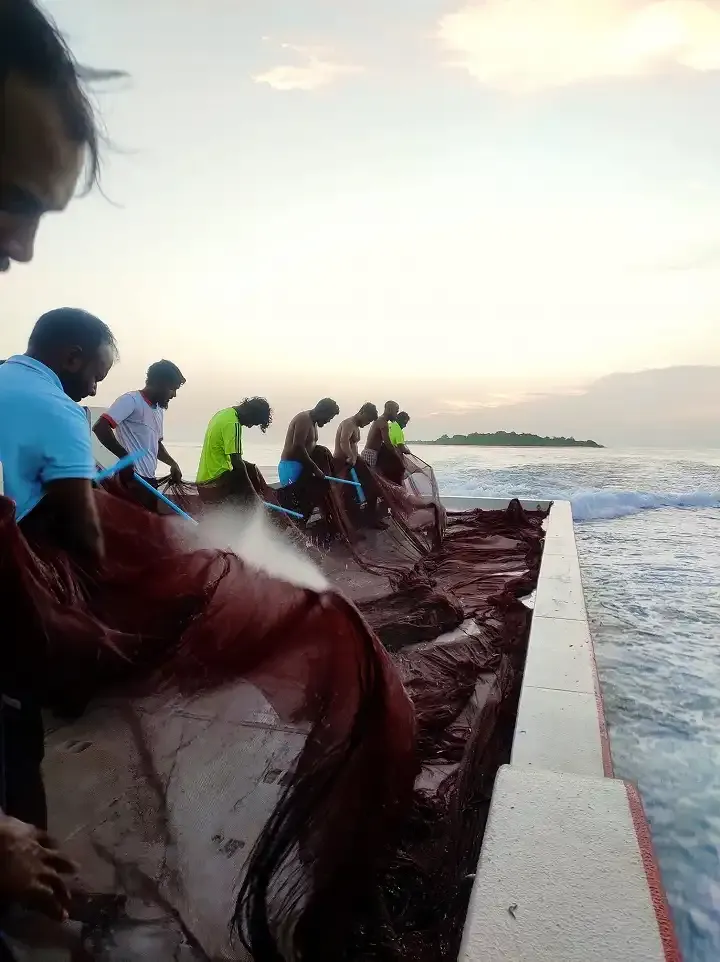
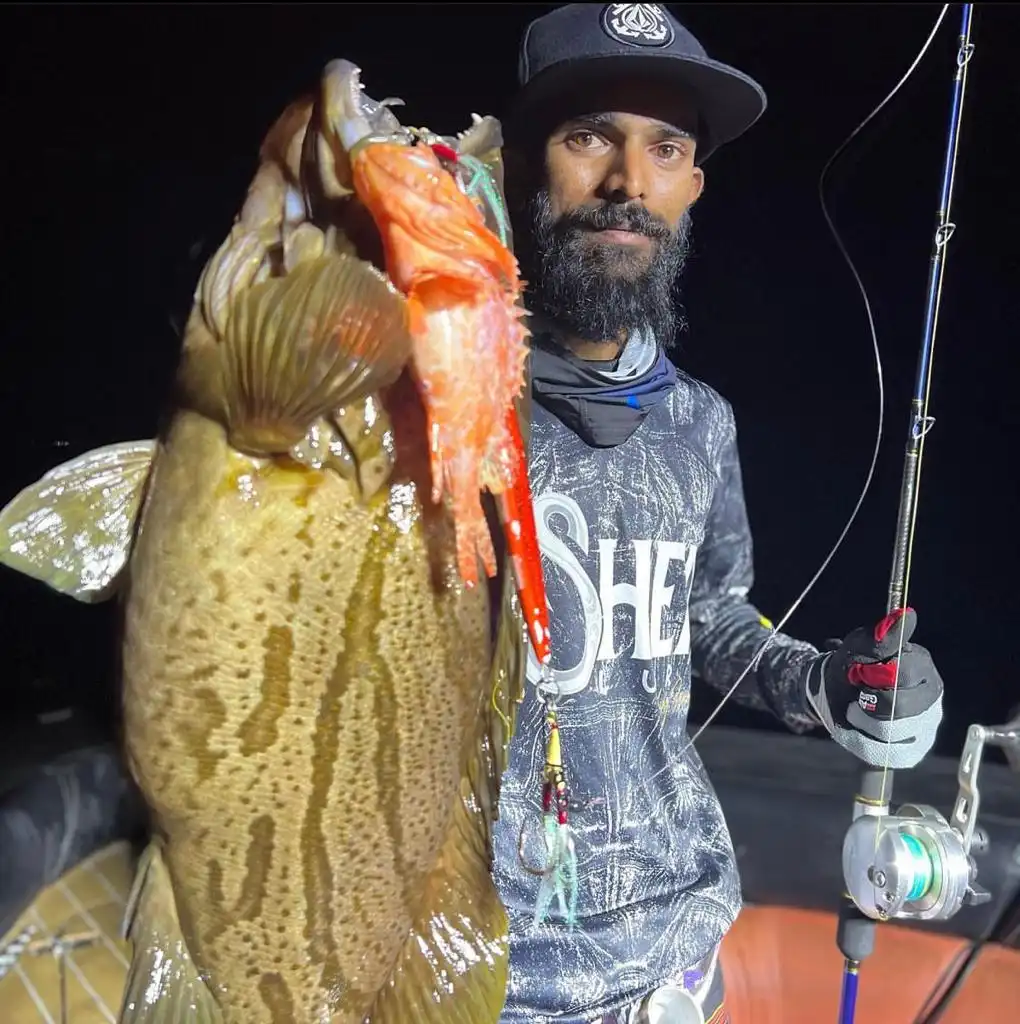
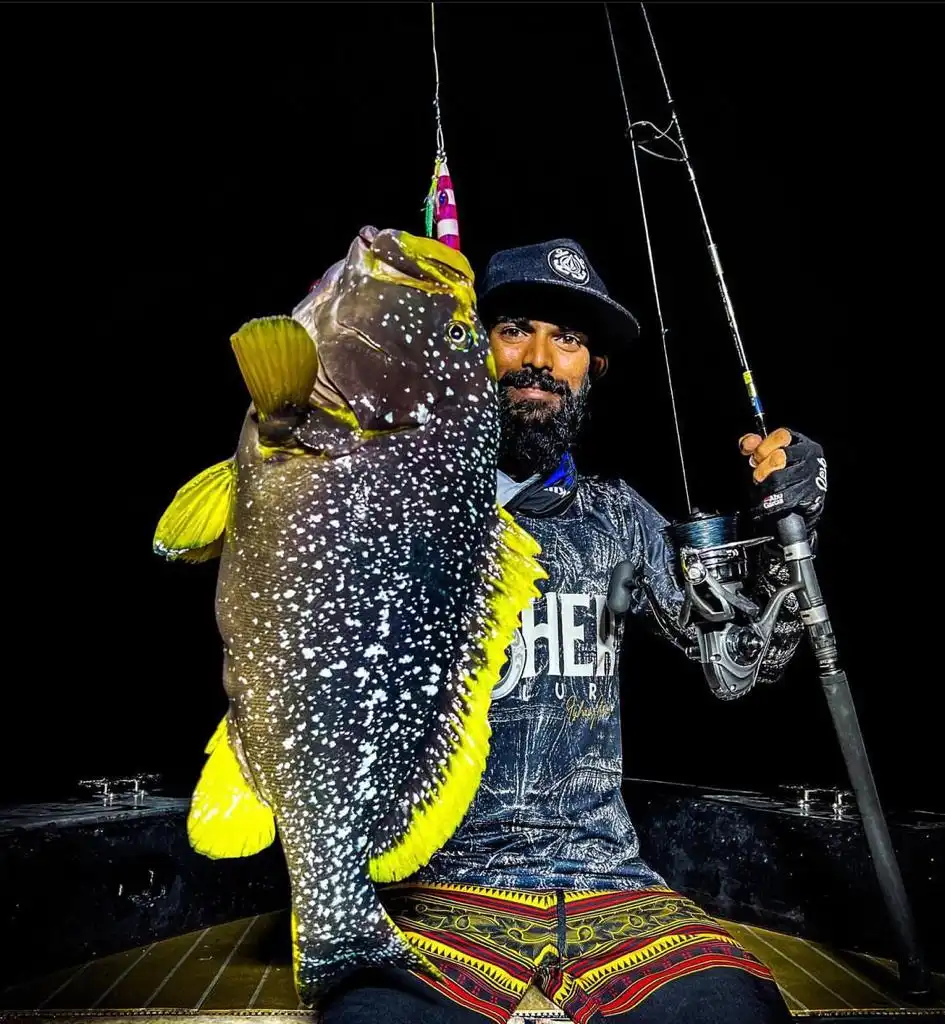
Fishing after dark is part of life on many islands. Reef fish such as groupers and snappers feed actively at night, and handline or bottom fishing from an anchored dhoni can be very productive. For visitors, a night fishing trip under the stars, often with the catch grilled on the beach afterwards, is one of the most memorable things to do on a local island.
Fish in Maldivian food
- Mas huni: the classic breakfast of shredded tuna mixed with grated coconut, onion, chilli and lime, eaten with flatbread (roshi).
- Garudhiya: a clear fish broth, usually made with tuna, served with rice, lime, chilli and onion.
- Rihaakuru: a thick, rich paste made by cooking tuna down for hours, used as a flavouring.
- Maldive fish: cured, smoked and dried tuna, grated into curries, sambols and snacks.
- Tuna curry and grilled reef fish: everyday dishes on every island.
The Malé fish market
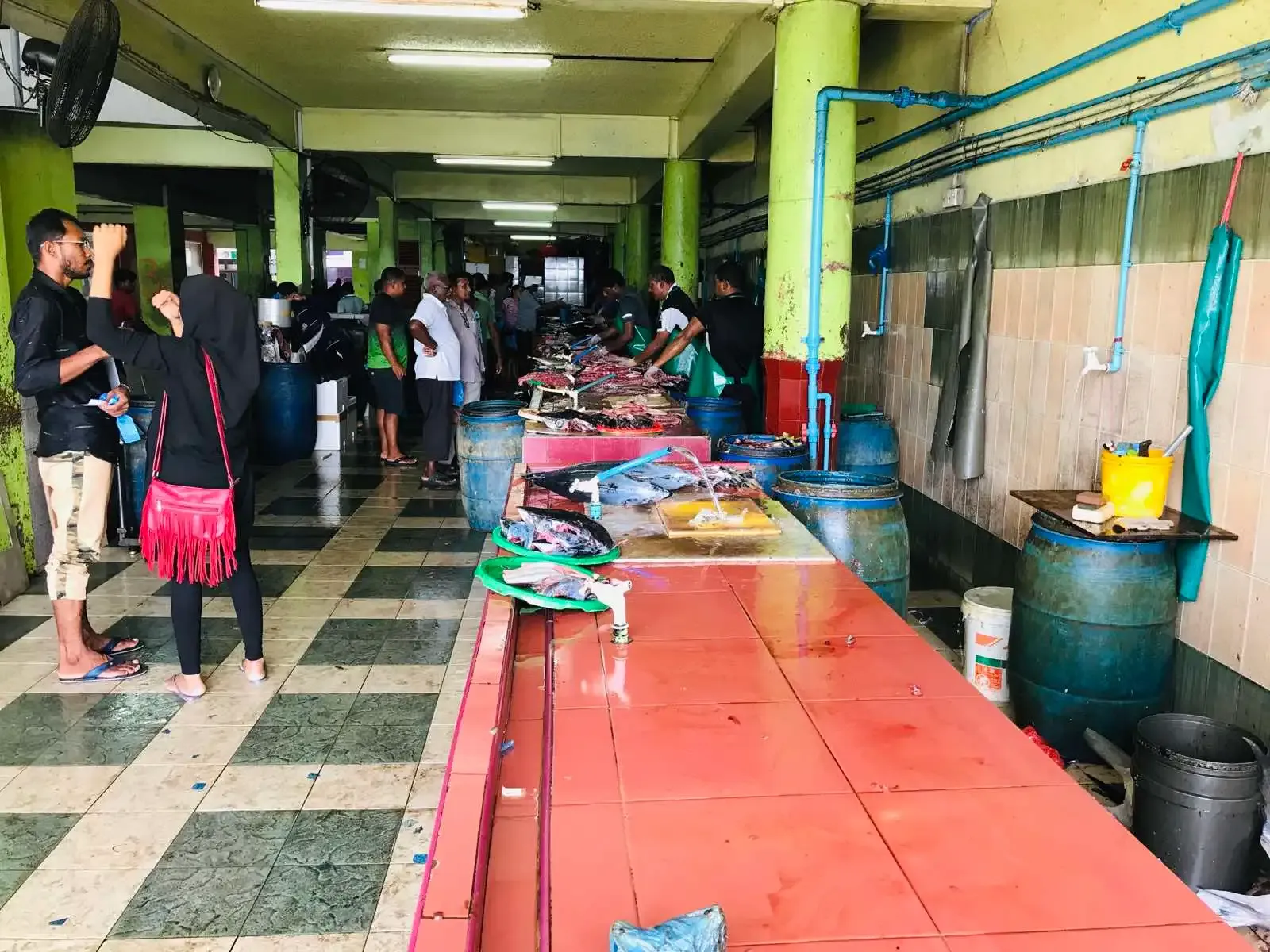
The fish market on the waterfront in Malé is the best place to see the daily catch. In the afternoon, fishing dhonis unload skipjack and yellowfin tuna, which are laid out on long tables and cut up for buyers. It's a lively, authentic slice of Maldivian life and free to visit.
Traditional fishing and modern sport fishing
Sport fishing in the Maldives grew up alongside traditional fishing rather than replacing it, and the two share the same knowledge of reefs, channels, tides and fish. The captains who run sport fishing trips today often come from fishing families and learned the sea on traditional boats. On a private charter, that local knowledge is what puts you on the right reef at the right tide.
Our private charter boat, Emperor, is based on Maamendhoo, a local island in Gaafu Alifu Atoll, at the Maldives Fishing and Holidays Lodge. Staying on a local island lets you see fishing culture up close: boats leaving at dawn, the catch coming in, and fish on the table at every meal. Read more in our guide to tuna fishing in the Maldives.
How visitors can try traditional fishing
- Sunset fishing trip: join a shared handline trip from a local island. On our site, sunset trips from Maafushi start from USD 25–30 per person.
- Night fishing: ask on local islands about night fishing trips for reef fish.
- Visit the fish market in Malé in the afternoon.
- Stay on a local island and eat what the boats bring in.
- Book a private charter and ask the crew to show you handline fishing alongside modern popping and jigging.
- Sunset Fishing Trip
 Fishing42 locations3 hrFrom $30
- Private Half-Day Fishing Charter
 Fishing51 locations4 hrFrom $980
Traditional Maldivian fishing: FAQs
What is the traditional fishing method in the Maldives?
Pole-and-line fishing for tuna, where fish are caught one at a time with a pole, line and barbless hook, and handline fishing for reef fish and tuna.
Why is pole-and-line fishing sustainable?
Fish are caught one by one with hooks instead of nets, so very few other species are caught by accident, and fishermen can target only the fish they want.
What is a dhoni?
The traditional Maldivian boat, long and narrow with a high curved prow, once sailed and now usually motorised. Dhonis are used for fishing, transport and excursions.
What is Maldive fish?
Tuna that has been cured, smoked and dried until hard. It keeps for a long time and is grated into Maldivian, Sri Lankan and South Indian dishes.
Can tourists try traditional fishing in the Maldives?
Yes. Sunset and night handline fishing trips from local islands are easy to book, and on a private charter you can ask the crew to show you traditional handline fishing.